If I don't know you and I pass you on the street, chances are, I try to flash you a friendly smile. The thing is, when I do this, I seem to have some problem coordinating my mouth muscles, and so what you get can best be described as an "mmmf" face, the sort of face that Charlie Brown makes when he is eating a peanut butter and jelly sandwich and grunting in assent.
When I see someone I know, I'm freed of my muscular paralysis and able to give that person a genuine, open-lipped smile. Why I can't do this with people I don't know, I'm not quite sure, but I suspect that it has something to do with feeling awkward.
(Sometimes, when I pass large groups of teenages, I forget how to walk and have to concentrate really hard. This doesn't happen nearly as often as it used to, but it does still happen occasionally.)
I'm pretty sure that these are the physical manifestations of intense self-consciousness, and they are difficult to overcome.
So, while my "mmmf" face may possibly still be a friendly face, I'm working on a simple smile, not even a full-force, tooth-showing smile, but just a slight upturn of closed lips. I practiced it in the mirror - I don't have to put forth much effort for it to look real, but because this particular smile feels so unnatural to me, not being my regular, without-thinking smile, I need to work on it. It actually looks fine, but it feels like it looks ridiculous, and I have to keep checking the mirror to make sure it doesn't.
(I've tried the teeth-together smile with lips bared, which some people can pull off quite well, and this actually feels very comfortable on my face, but unfortunately, when I do this, I look like a maniacal beaver readying for the attack.)
Please tell me that I am not the only one who has this sort of problem.
Monday, June 02, 2008


I am supposed to be doing something else right now...
...but I had to stop to say, "Holy crap!"
When Ferraro first came out with her problematic comments about race, I wasn't quite convinced that they were racist. Silly me. How very wrong I was. This newest piece certainly provides the context for those earlier comments, and it removes any benefit of the doubt I had been willing to give her. All I can say now is
1) I so regret having worn a Mondale/Ferraro campaign button back in high school;
2) in contrast to Ferraro's attempt to speak for American women, of the feminists I know, only a couple still support Clinton at this point, and the vast majority are just appalled at the blatant racist comments she has made;
3) the fact that White people are afraid to say something because they feel they will be called racist does not automatically mean that they are being treated unfairly, nor is this a recent outcome of the Obama campaign. Hello? It's called entitlement, and it's about having become accustomed to saying racist things and not being called on them because I didn't mean anything by it! I'm not racist! I don't see color! Everyone is white to me!;
4) it is disingenous, at best, to accuse Obama of playing the race card when he was forced to give a speech on race relations in America (but nonetheless, did so with a heckuva lot more grace and honesty than we've seen from any major candidate, ever, thus far);
- and -
5) You know what? Yes, sometimes, White people, we may get called out for racism when, in fact, we have not been racist. That can and does happen. But you know what else? What happens far more often is that White people get called out for racism and refuse to recognize that what we did was genuinely racist - even if we didn't mean it to be! - as we have seen with Ferraro yet again.
I am going to go make a donation to Obama's campaign, now. Was that the effect you were hoping to have, Gerri?
Thanks to Angry Black Woman for the link.
When Ferraro first came out with her problematic comments about race, I wasn't quite convinced that they were racist. Silly me. How very wrong I was. This newest piece certainly provides the context for those earlier comments, and it removes any benefit of the doubt I had been willing to give her. All I can say now is
1) I so regret having worn a Mondale/Ferraro campaign button back in high school;
2) in contrast to Ferraro's attempt to speak for American women, of the feminists I know, only a couple still support Clinton at this point, and the vast majority are just appalled at the blatant racist comments she has made;
3) the fact that White people are afraid to say something because they feel they will be called racist does not automatically mean that they are being treated unfairly, nor is this a recent outcome of the Obama campaign. Hello? It's called entitlement, and it's about having become accustomed to saying racist things and not being called on them because I didn't mean anything by it! I'm not racist! I don't see color! Everyone is white to me!;
4) it is disingenous, at best, to accuse Obama of playing the race card when he was forced to give a speech on race relations in America (but nonetheless, did so with a heckuva lot more grace and honesty than we've seen from any major candidate, ever, thus far);
- and -
5) You know what? Yes, sometimes, White people, we may get called out for racism when, in fact, we have not been racist. That can and does happen. But you know what else? What happens far more often is that White people get called out for racism and refuse to recognize that what we did was genuinely racist - even if we didn't mean it to be! - as we have seen with Ferraro yet again.
I am going to go make a donation to Obama's campaign, now. Was that the effect you were hoping to have, Gerri?
Thanks to Angry Black Woman for the link.
Thursday, May 29, 2008
Wednesday, May 28, 2008
On blogs gone private.
Can I just say that it is enormously annoying to go to a blog that I've been reading for months or years and find that it suddenly has gone private, without a by-your-leave or anything? And that it would be nice if people who wanted to do this would instead put up a page on the blog that says "Gone private. If you want an invitation, contact me at blahblahblah@email.com." And then take down the other stuff and start up a new site for your private blog. Because seeing "It doesn't look like you have been invited to read this blog" just hurts my feelings.
Skippy, I'm lookin' at you.
Skippy, I'm lookin' at you.
Saturday, May 24, 2008
In search of Skinny Chips.
I was looking forward to finding a few of these for the weekend, and now I cannot find them. Anywhere. I have been calling grocery and natural foods stores all morning.
Have you seen these chips?

Have you seen these chips?

Friday, May 16, 2008
Another way to help women in the Congo.
To donate money directly to Panzi Hospital in the DRC, go here. Be sure to select "Panzi Hospital" under "purpose." The Panzi Hospital is the ONLY working hospital in the area. See also this piece by Eve Ensler on the work of Dr. Denis Mukwege at the Panzi Hospital.
Thursday, May 15, 2008
How to Help.
I'm coming out of seclusion long enought to say that, if you are horror-stricken by the events of the past weeks and months and years and would like to help:
1) you can send a donation to the American Jewish World Service. The AJWS is working in Darfur and Burma.
To urge Congress to increase economic pressure on the Burmese military regime - which is preventing desperately-needed aid from reaching the people - go here.
To urge Congress to provide funding for peacekeeping in Darfur - in the SIXTH YEAR of the genocide - go here.
2) you can make a donation to the Red Cross to aid survivors of the Chinese earthquake.
3) you can organize to help women of the Congo. Anxious Black Woman has posted a list of businesses profiting off of the rape and abuse of women there, as well as of companies that do business with those who profit off the rape and abuse of Congolese women. The second list has some very familiar names on it, including Wal-Mart, Best Buy, and several computer manufacturers. As she says, "So, basically, as you can see, we're all implicated in this DRC conflict...Somehow, as democratic citizens, we must yield our power through our dollars and our votes."
In case you're missing that - when we purchase computers and cell phones and televisions and cameras, we are directly supporting rape and torture of Congolese women.
What are we going to do about that?
ABW also links to a petition put together by Tasha at Sowing Circle - please take a look.
Finally, you can donate to CARE, which has staff in the Democratic Republic of the Congo and is working to help survivors.
1) you can send a donation to the American Jewish World Service. The AJWS is working in Darfur and Burma.
To urge Congress to increase economic pressure on the Burmese military regime - which is preventing desperately-needed aid from reaching the people - go here.
To urge Congress to provide funding for peacekeeping in Darfur - in the SIXTH YEAR of the genocide - go here.
2) you can make a donation to the Red Cross to aid survivors of the Chinese earthquake.
3) you can organize to help women of the Congo. Anxious Black Woman has posted a list of businesses profiting off of the rape and abuse of women there, as well as of companies that do business with those who profit off the rape and abuse of Congolese women. The second list has some very familiar names on it, including Wal-Mart, Best Buy, and several computer manufacturers. As she says, "So, basically, as you can see, we're all implicated in this DRC conflict...Somehow, as democratic citizens, we must yield our power through our dollars and our votes."
In case you're missing that - when we purchase computers and cell phones and televisions and cameras, we are directly supporting rape and torture of Congolese women.
What are we going to do about that?
ABW also links to a petition put together by Tasha at Sowing Circle - please take a look.
Finally, you can donate to CARE, which has staff in the Democratic Republic of the Congo and is working to help survivors.
Monday, May 12, 2008
MIA
That would be me. I still have a pile of clippings and books to write about, but first I need to finish revising the dear-god-I-hope-this-is-the-final-draft manuscript to get it to the publisher by June 1. I feel completely out of the loop of bloglandia, and maybe that is a good thing.
Monday, April 28, 2008
It has begun.
Me: Do you want waffles this morning?
Bean: No!
Me: ...I thought you liked waffles?
Bean: (Getting upset) No! I don't want waffles!
Me: OK, that's all right. You don't have to have waffles. ...What's the problem?
Bean: Waffles are old school!!
Bean: No!
Me: ...I thought you liked waffles?
Bean: (Getting upset) No! I don't want waffles!
Me: OK, that's all right. You don't have to have waffles. ...What's the problem?
Bean: Waffles are old school!!
A truly awesome post on hair...
with some truly insensitive comments.
Here's the post - a must-read.
So, Meowser is writing about being a woman and going bald, and it's obvious as you read her post that this is a huge, weighty, painful issue, not just for her, but for lots of women. She notes in her post that significant numbers of women question their very womanhood upon balding and consider suicide. Clearly, this is a sensitive issue and should be addressed as such in the comments, right? And people who are happy with their hair and who were nevertheless moved by the post will say so in a sensitive manner?
But, in among the comments by women who are losing their hair or whose hair has always been a source of pain for them:
My hair, I have to say, is my crowning glory. It’s naturally blonde but I have it died red with blonde highlights. My stylist is an awesome short-hair stylist and I pay her dearly. I get compliments on my hair nearly every day from women young and old, black and white. One exchange student on campus even told me in a Haitian accent that my hair looks like fire. My husband used to not believe me until we went shopping together and he saw first-hand how often I got complimented on it.
And
It was good for me to read about a different perspective from my own. I am a fat chick, but one aspect of my appearance I’ve always been pretty proud of is my head of smooth, thick, wavy black hair.
And
I have hip-length straight brown hair. It’s my only physical that I truly think is beautiful; it’s thick and gorgeous and shot through with the most ridiculous highlights ever. I don’t just have lighter patches and darker patches; there are strands of my hair that are black, and some that are flat-out platinum. It’s never been dyed or permed or treated with chemicals ever, and I love my hair to bits.
By way of contrast, here's a quote that manages to make the point that the commenter is attached to her hair, without turning her into an inconsiderate asshat:
My hair is one of the few things about my appearance that I DO like - losing it would be really hard. But I think your post illustrates very well how much we define ourselves (and are defined by others) by our looks...
And here's another:
Excellent post. I’ve always been very attached to my hair, but I never really thought about how much of a cultural component there is to that.
So, you know, it is possible.
Here's the post - a must-read.
So, Meowser is writing about being a woman and going bald, and it's obvious as you read her post that this is a huge, weighty, painful issue, not just for her, but for lots of women. She notes in her post that significant numbers of women question their very womanhood upon balding and consider suicide. Clearly, this is a sensitive issue and should be addressed as such in the comments, right? And people who are happy with their hair and who were nevertheless moved by the post will say so in a sensitive manner?
But, in among the comments by women who are losing their hair or whose hair has always been a source of pain for them:
My hair, I have to say, is my crowning glory. It’s naturally blonde but I have it died red with blonde highlights. My stylist is an awesome short-hair stylist and I pay her dearly. I get compliments on my hair nearly every day from women young and old, black and white. One exchange student on campus even told me in a Haitian accent that my hair looks like fire. My husband used to not believe me until we went shopping together and he saw first-hand how often I got complimented on it.
And
It was good for me to read about a different perspective from my own. I am a fat chick, but one aspect of my appearance I’ve always been pretty proud of is my head of smooth, thick, wavy black hair.
And
I have hip-length straight brown hair. It’s my only physical that I truly think is beautiful; it’s thick and gorgeous and shot through with the most ridiculous highlights ever. I don’t just have lighter patches and darker patches; there are strands of my hair that are black, and some that are flat-out platinum. It’s never been dyed or permed or treated with chemicals ever, and I love my hair to bits.
By way of contrast, here's a quote that manages to make the point that the commenter is attached to her hair, without turning her into an inconsiderate asshat:
My hair is one of the few things about my appearance that I DO like - losing it would be really hard. But I think your post illustrates very well how much we define ourselves (and are defined by others) by our looks...
And here's another:
Excellent post. I’ve always been very attached to my hair, but I never really thought about how much of a cultural component there is to that.
So, you know, it is possible.
Sunday, April 27, 2008
If you want to help...
Here is a link to the Sean Bell Benefit Fund.
Contributions are appreciated and go to the children of Sean.
Sean Bell Benefit Fund
c/o Mitchell Law Office
225 Broadway, Suite 1410
New York, NY 10007
or call 1-866-695-2992.
It's 2008: How are we doing on bi and trans inclusion?
It's interesting to me that we are *still* having arguments about whether/how to include bisexual and transgendered people within the larger queer and women's communities.
Lately, there have been some pretty ignorant and bigoted comments made about trans people. It's not like this is anything new - there are several radical feminist blogs that continue the same kind of trans-trashing language and the refusal to recognize cis privilege.
But I'm struck by the fact that this kind of narrow thinking persists, even as I witness such changes in my peers' and in my own thinking around this issue, largely as a result of coming to have trans friends and acquaintances who put a personal face on all of this.
As feminists, what we share is the belief that we do live in an oppressive society. And let's be honest about it - it flat out feels good to have a common enemy, to be able to say, for example, that men, and male energy, and male thinking, and so on, are the problem. It feels *great* to be able to blame other people for the ills of the world - and there are certainly blame-worthy individuals out there. Of course, this "us-them" mentality conveniently allows us to ignore our own role in shaping the world, particularly those of us who benefit from the status quo, such as cis women, heterosexual women, white women, able-bodied women, Christian women, etc.
And for many feminist cis folk, trans is a tough issue to get their heads around. Much as the Lesbian Nation decries bisexual women as traitors who just want that conduit to patriarchal privilege, some radical feminists decry transmen as selling out (or, slightly more kindly, giving up on) women in order to buy this privilege - and transwomen as men who want so badly to own women that they are willing to recerate their own bodies just to do it.
Er...kind of a long way to go, wouldn't that be?
Anyway - so we have now seen several supposedly radical feminists react as if transpeople are oppressing them by existing; as if transwomen aren't women; as if transmen don't exist, for the most part; as if transpeople of color don't exist at all; as if cisgendered women have the right to determine who else gets to use the term "woman."
At the same time, I've been part of a dialogue around the Bi/Trans Area Interest Group at NWSA. Without going too much into the history of the group, suffice it to say that it's been a space for bi/trans people and for people doing research in these areas for nearly a decade, and now we are planning to propose the formation of a separate Trans Caucus. Caucuses in the NWSA are an important part of the governance of the organization, and they are made up of otherwise underrepresented minority groups.
When this proposal was mentioned on WMST-L, it prompted one individual to argue repeatedly that allowing such a caucus would be damaging to the organization, as it would be giving disproportionate power to the minority of bi and trans people. She argued that, given the small percentage of the population that is trans, they would be overrepresented by a Caucus, and further, that bi and trans were already overrepresented in Women's Studies (!). In her argument, she implied that "women" was a category exclusive of "bi and trans people." She pointed out that the push for bi and trans inclusion was always motivated by "pure self interest", thereby implying that this inclusion would always have a negative impact and that it was always unwanted by cisgendered and monosexual people. (Thankfully, one activist responded, saying, "it's unfortunate that the monosexual, cisgendered majority is so silent about resisting and uprooting their unearned privileges, isn't it?")
So, here we are, still, in this place we've been in for the last couple of decades, at least, in which bisexual and trans people are perceived as vampires who have nothing to contribute to the discipline, organization, or community. Any work that we have done is motivated by self-interest, and therefore bad and wrong and selfish - unlike any other social movement, I guess, because certainly the feminist movement was not motivated by self-interest, was it? Nor the labor movement? Nor civil rights? Any contributions we might make as scholars who study bi and trans politics, identities, and so forth must simply be taking the place of scholarship made more worthy by its focus on cis women, het women, white women, lesbians?
It is worth pointing out that the majority of responses argued against this lone naysayer, and that I think the Trans Caucus will fly. But I am, as always, taken aback by this entrenched thinking that precludes any real conversation or understanding of others' experiences. And as always, it is disappointing.
Lately, there have been some pretty ignorant and bigoted comments made about trans people. It's not like this is anything new - there are several radical feminist blogs that continue the same kind of trans-trashing language and the refusal to recognize cis privilege.
But I'm struck by the fact that this kind of narrow thinking persists, even as I witness such changes in my peers' and in my own thinking around this issue, largely as a result of coming to have trans friends and acquaintances who put a personal face on all of this.
As feminists, what we share is the belief that we do live in an oppressive society. And let's be honest about it - it flat out feels good to have a common enemy, to be able to say, for example, that men, and male energy, and male thinking, and so on, are the problem. It feels *great* to be able to blame other people for the ills of the world - and there are certainly blame-worthy individuals out there. Of course, this "us-them" mentality conveniently allows us to ignore our own role in shaping the world, particularly those of us who benefit from the status quo, such as cis women, heterosexual women, white women, able-bodied women, Christian women, etc.
And for many feminist cis folk, trans is a tough issue to get their heads around. Much as the Lesbian Nation decries bisexual women as traitors who just want that conduit to patriarchal privilege, some radical feminists decry transmen as selling out (or, slightly more kindly, giving up on) women in order to buy this privilege - and transwomen as men who want so badly to own women that they are willing to recerate their own bodies just to do it.
Er...kind of a long way to go, wouldn't that be?
Anyway - so we have now seen several supposedly radical feminists react as if transpeople are oppressing them by existing; as if transwomen aren't women; as if transmen don't exist, for the most part; as if transpeople of color don't exist at all; as if cisgendered women have the right to determine who else gets to use the term "woman."
At the same time, I've been part of a dialogue around the Bi/Trans Area Interest Group at NWSA. Without going too much into the history of the group, suffice it to say that it's been a space for bi/trans people and for people doing research in these areas for nearly a decade, and now we are planning to propose the formation of a separate Trans Caucus. Caucuses in the NWSA are an important part of the governance of the organization, and they are made up of otherwise underrepresented minority groups.
When this proposal was mentioned on WMST-L, it prompted one individual to argue repeatedly that allowing such a caucus would be damaging to the organization, as it would be giving disproportionate power to the minority of bi and trans people. She argued that, given the small percentage of the population that is trans, they would be overrepresented by a Caucus, and further, that bi and trans were already overrepresented in Women's Studies (!). In her argument, she implied that "women" was a category exclusive of "bi and trans people." She pointed out that the push for bi and trans inclusion was always motivated by "pure self interest", thereby implying that this inclusion would always have a negative impact and that it was always unwanted by cisgendered and monosexual people. (Thankfully, one activist responded, saying, "it's unfortunate that the monosexual, cisgendered majority is so silent about resisting and uprooting their unearned privileges, isn't it?")
So, here we are, still, in this place we've been in for the last couple of decades, at least, in which bisexual and trans people are perceived as vampires who have nothing to contribute to the discipline, organization, or community. Any work that we have done is motivated by self-interest, and therefore bad and wrong and selfish - unlike any other social movement, I guess, because certainly the feminist movement was not motivated by self-interest, was it? Nor the labor movement? Nor civil rights? Any contributions we might make as scholars who study bi and trans politics, identities, and so forth must simply be taking the place of scholarship made more worthy by its focus on cis women, het women, white women, lesbians?
It is worth pointing out that the majority of responses argued against this lone naysayer, and that I think the Trans Caucus will fly. But I am, as always, taken aback by this entrenched thinking that precludes any real conversation or understanding of others' experiences. And as always, it is disappointing.
Saturday, April 26, 2008
Now I have to go change my pants...
...because I was catching up at Bint Alshamsa's and I started to read her post,
and I got as far as this link, and I started laughing so hard, I peed.
Not really. But it could've happened. (The letters page is also hilarious.)
and I got as far as this link, and I started laughing so hard, I peed.
Not really. But it could've happened. (The letters page is also hilarious.)
Thursday, April 24, 2008
PFLAG New Orleans is just all right with me
Here's what I like to see. From the Phyllabuster listserv:
Phyllis,
I was forwarded a copy of a recent conversation on the Phyllabuster list, regarding the Louisiana safe schools bill, and the work of PFLAG’s New Orleans chapter. I wanted to personally respond, and hope that you will post my message on your full list, so your readers have a complete picture of what is happening in New Orleans.
The truth is that our New Orleans chapter will not be testifying in favor of the non-inclusive bill. Our chapter leaders were originally led to believe that H.B. 674 was inclusive of transgender students. But, upon learning that was not the case, the chapter immediately withdrew its plans to address the legislature in support of the bill.
Instead, our national office is working closely with our supporters on the ground in New Orleans to educate the public – and lawmakers – about why an inclusive bill is so essential. We will be working on op-ed placements and other actions to call on Representative Leger and other leaders to make the necessary modifications so that this legislation covers every student, and leaves no child behind.
PFLAG, as always, remains committed to ensuring that students are protected from bullying and harassment regardless of their sexual orientation, gender identity or expression. Our commitment to that principle has never wavered, and never will.
I hope this is a helpful clarification.
Thank you,
Steve
Steve Ralls
Director of Communications
Parents, Families and Friends of Lesbians and Gays (PFLAG) National
www.pflag.org
Sunday, April 20, 2008
Dear Missionaries...
...it is really rude to stand outside CVS and try to convert people on other religions' high holy days, such as Passover, which it is now.
Get a clue.
Sincerely,
Plain(s)feminist
Get a clue.
Sincerely,
Plain(s)feminist
Friday, April 18, 2008
Prof Black Woman's Meme: Why Women's Studies?
If you are a person of color who teaches Women, Gender, or Women and Gender Studies please write a blog post about why you teach in that inter/discipline. Please also address how or why you stick with it when issues of racism, homophobia or heterosexism, classism, or other issues arise. You can give as many reasons as you want and be as elaborate or succinct as you want. Tag at least 5 people and make sure that they know they have been tagged so we reach as many people as possible. You may participate even if you are just considering teaching in the interdiscipline or if your classes are cross-listed. (White allies, you are welcome to participate too, as long as you center the issue of how you support women of color as a central question in your answer.)
(Note: This morphs a bit into the discussion about "feminism," spurred in part by BFP.)
I was thinking, on my drive home this afternoon, that I am really lucky to have had a Women's Studies education that prioritized anti-racist work and the centering of women of color, queer women, and working-class women. First of all, if I had had to focus on Derrida, Lacan, Butler, and others who write like that, I would never have finished grad school. Second of all, I am incredibly grateful to have been introduced early on in my graduate studies to theorists like Audre Lorde, Gloria Anzaldúa, Barbara Smith, bell hooks, Patricia J. Williams, Patricia Hill Collins, Dorothy Allison, and many others. These writings, to me, are what "feminist theory" means. If Women's Studies is, as many say, the teaching arm of the feminist movement, then it makes sense that the philosophies at the core of the discipline come from theory that is based on lived experience. That is what these and other theorists do: they use the experiences of their lives, and of the lives of their people (whether that be people of color, people of a particular ethnic or racial background, lgbt people, etc.), as the basis for a critical analysis of power and privilege.
Using the experiences of our lives to ground our theory has always been part of the feminist movement. Even if you locate the Second Wave as a monolithic White feminist movement (and I don't), or as the beginnings of modern feminism (and I don't), you can see that consciousness-raising and "the personal is political" is all about looking at the stuff of our lives and critically analyzing it.
So that means that issues of poverty, racism, homelessness, immigration, and colonization are every bit as central to Women's Studies as are issues of abortion rights, the glass ceiling, eating disorders, and sexual assault.
Often, though, Women's Studies practitioners get it wrong. And when this happens, I don't fault Women's Studies as a discipline. I fault the individuals, and I become more determined to make sure that at least my students will get it, that they won't be guilty of going to a conference and saying, "I don't see what race and class have to do with gender."*
I *do* wonder, from time to time, if we should come up with another name for what we do. But I'll tell you something, and this will probably not be too popular. Racism in the feminist movement, and in Women's Studies, may be deeply, deeply entrenched. But we often act as if they are the worst offenders, as if they invented racism and White privilege and all the rest of it. Whatever our faults as a movement and discipline, feminism/Women's Studies has named this problem, has acknowledged it, and has worked to fix it. Unsuccessfully in many, many cases, yes. Successfully in some cases.
Can we say the same of other movements that have so many White people in them? Can we say the same of predominantly male movements that have White people in them?
This is obviously not a very attractive notion, suggesting that, 'hey, Women's Studies/feminism isn't as racist, and there are other, more racist movements out there, so hey, it's not all bad.' I obviously don't mean this. Rather, I mean that I see the potential for Women's Studies/feminism, not just or even mostly the failures. I see people who are trying to get it. And I can think of some who have gotten it, from whom I have learned a great deal.
And it is that potential that I won't give up. I feel like I am a stakeholder in this movement, and I am not willing to give up my focus on race and class and ability and religion and sexuality in my analysis of gender, or to allow my students to think that any of these can be separated from the other.
And, as Anxious Black Woman said the other day, "I will not disavow the 'feminist' label because I didn't get it coming through the back door."
I didn't get Women's Studies from White theory - I got it from women of color, most of whom called themselves feminists and most of whom located themselves within Women's Studies.
Patricia Hill Collins argues that, to be a Black Feminist, you must be a Black woman. I'm not a Black woman, and not a Black Feminist, but my feminism is different from a feminism based on White people's gender issues. Some of us are experimenting with calling ourselves "Margins Feminists" - a term that may already be taken - to point out our focus on the issues of those groups that tend to be marginalized within mainstream feminism. So, this is the version of Women's Studies that my students get from me.
I've gotten this far, and I still haven't answered the question. Why do I teach Women's Studies? Because I really do think that it will make a difference, that it has as yet unrealized potential to change lives and realities, and that the discipline is slowly moving forward and making these changes.
*True story. This was said to me by the same (Latina?) lesbian who called me out for being bisexual and having a boyfriend.
Consider yourself tagged.
(Note: This morphs a bit into the discussion about "feminism," spurred in part by BFP.)
I was thinking, on my drive home this afternoon, that I am really lucky to have had a Women's Studies education that prioritized anti-racist work and the centering of women of color, queer women, and working-class women. First of all, if I had had to focus on Derrida, Lacan, Butler, and others who write like that, I would never have finished grad school. Second of all, I am incredibly grateful to have been introduced early on in my graduate studies to theorists like Audre Lorde, Gloria Anzaldúa, Barbara Smith, bell hooks, Patricia J. Williams, Patricia Hill Collins, Dorothy Allison, and many others. These writings, to me, are what "feminist theory" means. If Women's Studies is, as many say, the teaching arm of the feminist movement, then it makes sense that the philosophies at the core of the discipline come from theory that is based on lived experience. That is what these and other theorists do: they use the experiences of their lives, and of the lives of their people (whether that be people of color, people of a particular ethnic or racial background, lgbt people, etc.), as the basis for a critical analysis of power and privilege.
Using the experiences of our lives to ground our theory has always been part of the feminist movement. Even if you locate the Second Wave as a monolithic White feminist movement (and I don't), or as the beginnings of modern feminism (and I don't), you can see that consciousness-raising and "the personal is political" is all about looking at the stuff of our lives and critically analyzing it.
So that means that issues of poverty, racism, homelessness, immigration, and colonization are every bit as central to Women's Studies as are issues of abortion rights, the glass ceiling, eating disorders, and sexual assault.
Often, though, Women's Studies practitioners get it wrong. And when this happens, I don't fault Women's Studies as a discipline. I fault the individuals, and I become more determined to make sure that at least my students will get it, that they won't be guilty of going to a conference and saying, "I don't see what race and class have to do with gender."*
I *do* wonder, from time to time, if we should come up with another name for what we do. But I'll tell you something, and this will probably not be too popular. Racism in the feminist movement, and in Women's Studies, may be deeply, deeply entrenched. But we often act as if they are the worst offenders, as if they invented racism and White privilege and all the rest of it. Whatever our faults as a movement and discipline, feminism/Women's Studies has named this problem, has acknowledged it, and has worked to fix it. Unsuccessfully in many, many cases, yes. Successfully in some cases.
Can we say the same of other movements that have so many White people in them? Can we say the same of predominantly male movements that have White people in them?
This is obviously not a very attractive notion, suggesting that, 'hey, Women's Studies/feminism isn't as racist, and there are other, more racist movements out there, so hey, it's not all bad.' I obviously don't mean this. Rather, I mean that I see the potential for Women's Studies/feminism, not just or even mostly the failures. I see people who are trying to get it. And I can think of some who have gotten it, from whom I have learned a great deal.
And it is that potential that I won't give up. I feel like I am a stakeholder in this movement, and I am not willing to give up my focus on race and class and ability and religion and sexuality in my analysis of gender, or to allow my students to think that any of these can be separated from the other.
And, as Anxious Black Woman said the other day, "I will not disavow the 'feminist' label because I didn't get it coming through the back door."
I didn't get Women's Studies from White theory - I got it from women of color, most of whom called themselves feminists and most of whom located themselves within Women's Studies.
Patricia Hill Collins argues that, to be a Black Feminist, you must be a Black woman. I'm not a Black woman, and not a Black Feminist, but my feminism is different from a feminism based on White people's gender issues. Some of us are experimenting with calling ourselves "Margins Feminists" - a term that may already be taken - to point out our focus on the issues of those groups that tend to be marginalized within mainstream feminism. So, this is the version of Women's Studies that my students get from me.
I've gotten this far, and I still haven't answered the question. Why do I teach Women's Studies? Because I really do think that it will make a difference, that it has as yet unrealized potential to change lives and realities, and that the discipline is slowly moving forward and making these changes.
*True story. This was said to me by the same (Latina?) lesbian who called me out for being bisexual and having a boyfriend.
Consider yourself tagged.
Thursday, April 17, 2008
A comment to Seal Press (and other publishers who want to publish women of color).
Here's something I posted to their blog and thought was worthy to repeat here:
I think there are some concrete things you can do to ensure that you get more proposals from women of color and that you publish more works by women of color:
1) At past conferences, publishers have offered sessions for conference attendees on getting published. What about working with some of the other publishers, at conferences Seal attends, to do sessions specifically for women of color on getting published and getting their proposals accepted?
2) Host receptions specifically for women of color, or make a certain time during the book exhibits a time that you publicize as being for women of color who have book ideas or proposals.
3) Invite women of color to be on your advisory board (and if you don't have one, create one). Ask them to help you identify writers and works for consideration.
4) Read women of color blogs. There are theorists doing work that rivals any feminist writing out there.
5) Consider the impact of your cover designs. I looked at the covers of several of your recent books, and so many of them feature a white woman on the cover. This sends a clear message about the content, even if the white woman on the cover doesn't accurately represent the content of the book. There's no special reason the covers have to be white women, is there?
Many of these suggestions will both help ensure that you get more proposals from women of color, and they will also allow women of color to network with publishers.
I think there are some concrete things you can do to ensure that you get more proposals from women of color and that you publish more works by women of color:
1) At past conferences, publishers have offered sessions for conference attendees on getting published. What about working with some of the other publishers, at conferences Seal attends, to do sessions specifically for women of color on getting published and getting their proposals accepted?
2) Host receptions specifically for women of color, or make a certain time during the book exhibits a time that you publicize as being for women of color who have book ideas or proposals.
3) Invite women of color to be on your advisory board (and if you don't have one, create one). Ask them to help you identify writers and works for consideration.
4) Read women of color blogs. There are theorists doing work that rivals any feminist writing out there.
5) Consider the impact of your cover designs. I looked at the covers of several of your recent books, and so many of them feature a white woman on the cover. This sends a clear message about the content, even if the white woman on the cover doesn't accurately represent the content of the book. There's no special reason the covers have to be white women, is there?
Many of these suggestions will both help ensure that you get more proposals from women of color, and they will also allow women of color to network with publishers.
If you're in the San Diego area, check this out.

Click for a larger image. Pat is an engaging, moving speaker, and I really encourage you to go hear what she has to say.
For women of color writers and writing women with disabilities...
...here is a press with a commitment to publishing your work:
In 2006 ARM launched Demeter Press, the first feminist press on motherhood. We have published four books and have another ten planned or in production. A central mandate of our press is to publish volumes on under-researched motherhood topics. (for example Demeter press published the first scholarly volume on aborginal mothering and the first READER on maternal theory). To this end, we are actively seeking proposals for EDITED scholarly collections on the following three subjects: Mothering and Islam; Mothering and Disability; and Latina/Chicana mothering. If you are interested in submitting a book prospectus please contact me at the address below. Please visit our website for more information on ARM and Demeter Press.
In 2006 ARM launched Demeter Press, the first feminist press on motherhood. We have published four books and have another ten planned or in production. A central mandate of our press is to publish volumes on under-researched motherhood topics. (for example Demeter press published the first scholarly volume on aborginal mothering and the first READER on maternal theory). To this end, we are actively seeking proposals for EDITED scholarly collections on the following three subjects: Mothering and Islam; Mothering and Disability; and Latina/Chicana mothering. If you are interested in submitting a book prospectus please contact me at the address below. Please visit our website for more information on ARM and Demeter Press.
Wednesday, April 16, 2008
Anyone else thinking...
...that there'd be quite a different reaction if it'd been Obama who'd tried to appeal to the voters by being filmed drinking shots and talking about how his Daddy'd taught him to shoot?
Toni Locy and the Freedom of the Press
Last week, I heard Lucy Dalglish of the Reporters Committee for the Freedom of the Press (RCFP) talk about, among other things, the importance of a Federal Shield Law to protect reporters from being forced to give up their sources. As you may know from watching Lou Grant or Mary Tyler Moore, giving up sources is a big deal. It places the sources in jeopardy, first of all, but it also means that the reporter may not be able to work again, if sources do not trust him or her to keep them confidential.
She mentioned one case in particular that I found distressing: that of Toni Locy.
Locy was a USA Today reporter who wrote about Dr. Steven Hatfill, suspect in the case of the anthrax attacks that took place after 9/11. Hatfill is now suing the government for, essentially, ruining his life by sharing confidential information about him with the press. As part of this process, Locy was ordered to give up her government sources. She claims that she doesn't remember exactly which of her sources she spoke with for that story, which I at first found hard to believe, until I learned that she has a number of regular sources with whom she has spoken regarding several stories; that she was working on several stories at the time that she wrote the Hatfill piece; and that she wrote the piece five years ago. The result, Dalglish says, is that the judge ordered her to turn over the names of not just the sources she had spoken with, but of twelve of her Justice Department sources. And Locy refused.
So, in television and movies, when a reporter fails to give up her sources, she goes to jail, right? Like Judy Miller? Not any more:
In other words, she is being threatened with complete financial ruin. Note that, as the RCFP press release explains, this is unprecedented: "No judge has ever officially ordered that a reporter held in contempt may not accept reimbursement from an employer (or anyone else.)" Further, there are broader implications here for journalists. From an RCFP white paper:
The corporate structure of the news media has created new obstacles, both financial and practical, for journalists who must keep promises of confidentiality. Information that once existed only in a reporter’s notebook can now be accessed by companies that have obligations not only to their reporters, but to their shareholders, their other employees, and the public. Additionally, in the wake of an unprecedented settlement in the Wen Ho Lee Privacy Act case, parties can target news media corporations not just for their access to a reporter’s information, but also for their deep pockets. The potential for conflicts of interest is staggering, but the primary concerns of The Reporters Committee for Freedom of the Press are that:
• because of the 21st-century newsroom’s reliance on technology, corporations now have access to notes, correspondence and work-product information that before only existed in a reporter’s notebook;
• the new federal "e-discovery" court rules allow litigants to discover vastly more information than a printed page – or even a saved e-mail – would provide during litigation;
• while reporters generally only have responsibilities to themselves, their family, and their sources, a corporation often has responsibilities to shareholders and regulators that can force compromises in the protection of newsgathering materials;
• since so many reporters have said that they would willingly go to jail to protect their sources, some plaintiffs and prosecutors are now threatening to financially ruin the journalist, often with the assumption that news media corporations will back their reporter and pay steep fines;
• the settlement in the Wen Ho Lee case has demonstrated to civil plaintiffs that a large check from news media organizations can be obtained in lieu of confidential information;
• the costs of litigation – both emotional and financial – are weighing heavily on journalists and news media corporations.
Now - a separate, but related, issue here is that I think these folks who are wrongly accused have every right to sue. But without a free press, we will be even less informed than we are now.
Be sure to read the whole thing.
She mentioned one case in particular that I found distressing: that of Toni Locy.
Locy was a USA Today reporter who wrote about Dr. Steven Hatfill, suspect in the case of the anthrax attacks that took place after 9/11. Hatfill is now suing the government for, essentially, ruining his life by sharing confidential information about him with the press. As part of this process, Locy was ordered to give up her government sources. She claims that she doesn't remember exactly which of her sources she spoke with for that story, which I at first found hard to believe, until I learned that she has a number of regular sources with whom she has spoken regarding several stories; that she was working on several stories at the time that she wrote the Hatfill piece; and that she wrote the piece five years ago. The result, Dalglish says, is that the judge ordered her to turn over the names of not just the sources she had spoken with, but of twelve of her Justice Department sources. And Locy refused.
So, in television and movies, when a reporter fails to give up her sources, she goes to jail, right? Like Judy Miller? Not any more:
...U.S. District Court Judge Reggie Walton in Washington, D.C. issued an order holding former USA TODAY reporter Toni Locy in contempt for refusing to reveal confidential sources in the Hatfill/anthrax stories she wrote about five years ago.
Judge Walton denied Locy's request for a stay pending appeal to the DC Circuit and ordered that all fines must come out of her pocket: she will not be allowed to accept assistance in paying the fines. In a couple of weeks, the fines will accelerate to $5,000 a day and not even her own mother will be allowed to help her pay them. Her first payment is due at midnight tomorrow.
In other words, she is being threatened with complete financial ruin. Note that, as the RCFP press release explains, this is unprecedented: "No judge has ever officially ordered that a reporter held in contempt may not accept reimbursement from an employer (or anyone else.)" Further, there are broader implications here for journalists. From an RCFP white paper:
The corporate structure of the news media has created new obstacles, both financial and practical, for journalists who must keep promises of confidentiality. Information that once existed only in a reporter’s notebook can now be accessed by companies that have obligations not only to their reporters, but to their shareholders, their other employees, and the public. Additionally, in the wake of an unprecedented settlement in the Wen Ho Lee Privacy Act case, parties can target news media corporations not just for their access to a reporter’s information, but also for their deep pockets. The potential for conflicts of interest is staggering, but the primary concerns of The Reporters Committee for Freedom of the Press are that:
• because of the 21st-century newsroom’s reliance on technology, corporations now have access to notes, correspondence and work-product information that before only existed in a reporter’s notebook;
• the new federal "e-discovery" court rules allow litigants to discover vastly more information than a printed page – or even a saved e-mail – would provide during litigation;
• while reporters generally only have responsibilities to themselves, their family, and their sources, a corporation often has responsibilities to shareholders and regulators that can force compromises in the protection of newsgathering materials;
• since so many reporters have said that they would willingly go to jail to protect their sources, some plaintiffs and prosecutors are now threatening to financially ruin the journalist, often with the assumption that news media corporations will back their reporter and pay steep fines;
• the settlement in the Wen Ho Lee case has demonstrated to civil plaintiffs that a large check from news media organizations can be obtained in lieu of confidential information;
• the costs of litigation – both emotional and financial – are weighing heavily on journalists and news media corporations.
Now - a separate, but related, issue here is that I think these folks who are wrongly accused have every right to sue. But without a free press, we will be even less informed than we are now.
Be sure to read the whole thing.
Saturday, April 12, 2008
So, what did we learn from all this?
1) That the definition of "plagiarism" is much broader than most people think (thanks to Stoneself, comment #310 on the Feministe thread):
plagiarism:
Plagiarism is defined as the use of intellectual material produced by another person without acknowledging its source. This includes, but is not limited to:
(a.) Copying from the writings or works of others into one’s academic assignment without attribution, or submitting such work as if it were one’s own;
(b.) Using the views, opinions, or insights of another without acknowledgment; or
(c.) Paraphrasing the characteristic or original phraseology, metaphor, or other literary device of another without proper attribution.
from the uc berkeley library website
2) That the accusation of "plagiarism," like the accusation of "racism," will shut down any further conversation between the central parties. Thus, WOC/POC may "discretely" - as several (White?) commenters suggested at Feministe as well, I think, as at Schwyzer's - communicate, in the very gentlest terms possible, that perhaps the writer may have made a mistake for omitting a link, or perhaps the writer may have accidentally used language that might, to some, appear racist. But anything beyond that is, quite simply, rude, frightening, mean, and a threat to the accused party's career. In other words, the actual appropriation of WOC/POC's work, and the impact of this on their feelings and careers, are not of concern to White people who are being accused.
3) That when WOC/POC have their work appropriated, there is, therefore, no way to grieve this situation outside of a courtroom, which is simply not an option for most people, for a whole slew of reasons, including court costs and also the backlash of this kind of publicity.
4) That there are, in spite of the attempts of many White commenters to paint this as "Angry WOC v. White Women," many White feminist female and male allies who are, as a consequence of seeing both that BFP has silenced herself and that Amanda Marcotte and some of her allies have refused to acknowledge at all that she should have linked to BFP's work as well as to work by other WOC, rethinking our own practices as bloggers and writers as well as our own gut defensiveness. Many White feminists are thinking about what would happen if we, ourselves, were accused of appropriating someone else's ideas. Some mentioned their own processes of taking anti-racist action, which I quote not to lionize White people in this discussion, but to show that there are allies, there are examples of White people doing anti-racist thinking and acting that others of us can learn from:
As a white feminist, I’ve been thinking a lot lately about feminism being a movement for social justice for everyone, not the property or weapon of a specific group of people who identify in a specific way. I started thinking about this when I was wishing that more of the men in my life felt like they could come out and identify as feminists. But I’ve realized that the idea has a much broader application. And what the articles I read really drove home was: because I am a feminist, therefore committed to social justice wherever there’s a lack of it, the thing I need to think about FIRST isn’t necessarily that I am a woman, and therefore oppressed by the system. What I need to think about FIRST is that I am white (and affluent and able-bodied and privileged in other ways) which means that I (a) benefit significantly from the bigger system of inequality of which patriarchy is an integral part, and (b) need to listen really hard to the voices of women of color (etc.) who unquestionably can tell me things I can’t see for myself. (Susan, Comment 186)
I’m a white, low income, disabled sometime writer. I’ve lost a job, my total prospects for employment in a certain field, when I’m fearful about job market access and homelessness already, because my employer was doing racist shit and eventually I went "this is my living, but it’s their living too, and whether “they” actually staying alive or not" (Outfoxblog, Comment 189)
5) Holly rocks. Her whole Feministe post was wonderful, but I found this portion particularly helpful, as it serves as a model for dealing gracefully with realizing and being accountable for appropriating someone else's work:
6) That there are, indeed, ways to respond to accusations of appropriation, plagiarism, etc. Suggested by Holly, Comment 107:
"When I first wrote this piece, I did so without recognizing the work that’s been done on these particular issues, the intersection of feminism and immigration issues, by a lot of other women. Of course, we can’t always call out every single person whose writing and thoughts have filtered their way into our minds, but I do want to mention X blogger, Y author, and Z activist whose speech I heard last week. As a white woman who’s just starting to write about a crisis that has devastated the lives of so many immigrant women of color in this country, their communities and families, I want to recognize the work of these and other women of color and express hope that the progressive movement will follow their lead on in fighting racist immigration policies. I regret not including this in the first draft, since I might have come across like I was constructing this analysis myself — I’m not, and we’re fortunate to have many women of all colors thinking about this stuff."
7) The issues are not about us as individuals. As bloggers and writers, we have a larger responsibility than bolstering our own egos. We should also care about making a difference with our words. We should put the subjects of our writing first, and that means writing about them with clarity. Further, we have a responsibility to link to the bloggers and writers and artists who lay the groundwork for our own work, to the people who help us to come up with ideas. And we have a responsibility to read broadly so that we actually have a clue about what we write about.
BFP, via The SmackDog Chronicles:
We miss you, BFP.
plagiarism:
Plagiarism is defined as the use of intellectual material produced by another person without acknowledging its source. This includes, but is not limited to:
(a.) Copying from the writings or works of others into one’s academic assignment without attribution, or submitting such work as if it were one’s own;
(b.) Using the views, opinions, or insights of another without acknowledgment; or
(c.) Paraphrasing the characteristic or original phraseology, metaphor, or other literary device of another without proper attribution.
from the uc berkeley library website
2) That the accusation of "plagiarism," like the accusation of "racism," will shut down any further conversation between the central parties. Thus, WOC/POC may "discretely" - as several (White?) commenters suggested at Feministe as well, I think, as at Schwyzer's - communicate, in the very gentlest terms possible, that perhaps the writer may have made a mistake for omitting a link, or perhaps the writer may have accidentally used language that might, to some, appear racist. But anything beyond that is, quite simply, rude, frightening, mean, and a threat to the accused party's career. In other words, the actual appropriation of WOC/POC's work, and the impact of this on their feelings and careers, are not of concern to White people who are being accused.
3) That when WOC/POC have their work appropriated, there is, therefore, no way to grieve this situation outside of a courtroom, which is simply not an option for most people, for a whole slew of reasons, including court costs and also the backlash of this kind of publicity.
4) That there are, in spite of the attempts of many White commenters to paint this as "Angry WOC v. White Women," many White feminist female and male allies who are, as a consequence of seeing both that BFP has silenced herself and that Amanda Marcotte and some of her allies have refused to acknowledge at all that she should have linked to BFP's work as well as to work by other WOC, rethinking our own practices as bloggers and writers as well as our own gut defensiveness. Many White feminists are thinking about what would happen if we, ourselves, were accused of appropriating someone else's ideas. Some mentioned their own processes of taking anti-racist action, which I quote not to lionize White people in this discussion, but to show that there are allies, there are examples of White people doing anti-racist thinking and acting that others of us can learn from:
As a white feminist, I’ve been thinking a lot lately about feminism being a movement for social justice for everyone, not the property or weapon of a specific group of people who identify in a specific way. I started thinking about this when I was wishing that more of the men in my life felt like they could come out and identify as feminists. But I’ve realized that the idea has a much broader application. And what the articles I read really drove home was: because I am a feminist, therefore committed to social justice wherever there’s a lack of it, the thing I need to think about FIRST isn’t necessarily that I am a woman, and therefore oppressed by the system. What I need to think about FIRST is that I am white (and affluent and able-bodied and privileged in other ways) which means that I (a) benefit significantly from the bigger system of inequality of which patriarchy is an integral part, and (b) need to listen really hard to the voices of women of color (etc.) who unquestionably can tell me things I can’t see for myself. (Susan, Comment 186)
I’m a white, low income, disabled sometime writer. I’ve lost a job, my total prospects for employment in a certain field, when I’m fearful about job market access and homelessness already, because my employer was doing racist shit and eventually I went "this is my living, but it’s their living too, and whether “they” actually staying alive or not" (Outfoxblog, Comment 189)
5) Holly rocks. Her whole Feministe post was wonderful, but I found this portion particularly helpful, as it serves as a model for dealing gracefully with realizing and being accountable for appropriating someone else's work:
I am willing to confess on this subject. On more than one occasion I have not given credit where credit’s due, I haven’t acknowledged my influences and the prior work of others. I’m not proud of that, even though it can easily happen to anyone, especially a relatively sloppy thinker like me. They were mistakes and I’ve tried to own up to them. It hasn’t always been easy.
You can see one such mistake in the Sixteen Maneuvers post that I’ve already linked twice. Like I say at the beginning of that post, I based that list on some printed materials I found from a defunct anti-racist organization. I’ve used those materials before when running anti-racism workshops, and decided to adapt it for Feministe. Then Kai showed up and pointed out a similarity to Nezua’s Wite-Magik Attax. All of a sudden I realized with horror that I HAD read Nezua’s Glosario some time ago, that I must have been influenced by it in how I adapted the “Maneuevers”–even without consciously remembering. Aghast, I posted a response to give Nezua credit and call myself out for plagiarism. That was probably overstating, and I kind of wish I had edited the original post. In any case, I felt really embarassed — I had copied an idea, even unintentionally and even though it was from more than one source, without giving credit. Happily for me, Nezua regarded it as a birthday tribute. And I retroactively declared it one.
6) That there are, indeed, ways to respond to accusations of appropriation, plagiarism, etc. Suggested by Holly, Comment 107:
"When I first wrote this piece, I did so without recognizing the work that’s been done on these particular issues, the intersection of feminism and immigration issues, by a lot of other women. Of course, we can’t always call out every single person whose writing and thoughts have filtered their way into our minds, but I do want to mention X blogger, Y author, and Z activist whose speech I heard last week. As a white woman who’s just starting to write about a crisis that has devastated the lives of so many immigrant women of color in this country, their communities and families, I want to recognize the work of these and other women of color and express hope that the progressive movement will follow their lead on in fighting racist immigration policies. I regret not including this in the first draft, since I might have come across like I was constructing this analysis myself — I’m not, and we’re fortunate to have many women of all colors thinking about this stuff."
7) The issues are not about us as individuals. As bloggers and writers, we have a larger responsibility than bolstering our own egos. We should also care about making a difference with our words. We should put the subjects of our writing first, and that means writing about them with clarity. Further, we have a responsibility to link to the bloggers and writers and artists who lay the groundwork for our own work, to the people who help us to come up with ideas. And we have a responsibility to read broadly so that we actually have a clue about what we write about.
BFP, via The SmackDog Chronicles:
There’s a lot of women of color (and men of color!) who have talked about immigration. There’s a lot of women of color and men of color who have examined how sexualized violence has been the foremost result of the “strengthening” of borders. There’s been a lot of us who have insisted for a long time now that immigration is a feminist issue, goddamn it, get your head out of your ass.
I even wrote a whole speech about it.
Which is why it was startling to read a recent article about how sexualized violence against immigrant women is directly linked to using dehumanizing terminology like “illegal alien” without one attribute to any blogger of color, male or female, in the entire essay. There is even an earnest declaration about how paperwork is the true problem of immigration (bureaucracy of paperwork anybody?) coupled with a declaration that immigration is a feminist issue.
I do not accept that the author of this article made a mistake in not publishing any links to the work already being done by pro-immigration bloggers, nor do I accept that the author came up with these ideas all on her own.
[…]
What I *DO* believe is that I made a massive and horrible mistake in emphasizing that immigration is a feminist issue. In comments, a Chicano blogger said very politely, thank you for talking about this Ms. Feminist, but this has been going on for a long time.
I don’t give a shit about being published, I don’t give a shit about the interviews or the jobs or the fame–I DO give a shit that a Chicano is reading a white feminist talking about immigration and politely distancing himself from a gendered analysis of immigration because the author exhibits no historical or contextual awareness of women of color led feminist interventions into immigration.
I give a shit about that because not only does this erase the work that women of color are doing within racist white dominant structures, but it erases the work we are doing within our own communities. It makes it ok for men of color to dismiss the need for feminist interventions into our communities–AND it makes it ok for white women to continue beating up women of color with the idea that showing any concern for what happens to men in our communities is ridiculous, because, see, they don’t approve of feminism!
Poof! Just like that, feminists of color are made invisible even as we are the ones laying our bodies down for the foundation of the communication between men of color and white women.
I had thought at one time that feminism was about justice for women. I had thought it was about centering the needs of women, and creating action in the name of, by and for women. I had thought that feminism has its problems but it’s worth fighting for, worth sacrificing and sweating and crying and breaking down for.
It was all worth it to me, because it meant that I existed and my daughter existed and the women I love existed and we had the right to demand the violence committed against us ends.
I see now that feminism is nothing more than erasure. A conversation between white women and men. A commitment to the safety and well being of people who are never women of color.
We miss you, BFP.
Thursday, April 10, 2008
More on female circumcision.
And yeah, I know that that very title is angering lots of Western feminists. Here's why I'm using it today.
Yesterday, I had a long conversation with a Somali woman I work with. She told me that she is opposed to circumcising girls (her words) and that she gets very angry when Westerners talk about what are a number of different practices (from a token cut, in a hospital with anesthetic, that does not remove or harm the clitoris but rather a bit of skin in order to satisfy the parents, to full on excision and infibulation without anesthetic in some rural communities) as if they were all the same. She feels that the language Westerners use about this practice is very insulting to women. And she feels that these two tendencies hurt, rather than help, African women's efforts to end the practice.
Further, she told me, among Somali people, the practice has dropped from over 80% to about 30%. The reason will surprise you: it's because, she said, during the war, Somali people turned to Islam. And while some people claim that there is a verse in the Koran that prescribes this practice of cutting daughters, she tells me that when she contacted religious leaders, they said there was no such verse.
I thought this was an interesting counterpoint to much of what we in the West hear about the practice - and about Islam.
Yesterday, I had a long conversation with a Somali woman I work with. She told me that she is opposed to circumcising girls (her words) and that she gets very angry when Westerners talk about what are a number of different practices (from a token cut, in a hospital with anesthetic, that does not remove or harm the clitoris but rather a bit of skin in order to satisfy the parents, to full on excision and infibulation without anesthetic in some rural communities) as if they were all the same. She feels that the language Westerners use about this practice is very insulting to women. And she feels that these two tendencies hurt, rather than help, African women's efforts to end the practice.
Further, she told me, among Somali people, the practice has dropped from over 80% to about 30%. The reason will surprise you: it's because, she said, during the war, Somali people turned to Islam. And while some people claim that there is a verse in the Koran that prescribes this practice of cutting daughters, she tells me that when she contacted religious leaders, they said there was no such verse.
I thought this was an interesting counterpoint to much of what we in the West hear about the practice - and about Islam.
The Seal Scandal.
For those who have no idea what I was talking about when I briefly mentioned Seal in the previous post, here's the deal (see this first). And, since Seal Press has since decided to erase the whole thing from their blog, here is their post (without the comments, which I can't get to, 'cause they deleted the post) - you do not get to write this kind of stuff and then pretend it never happened!):
More
on
this.
Thursday, April 3, 2008
Seal and women of color
I feel compelled to go public here since there has been a lot of important, though discouraging, conversation going on over at Blackamazon, and because of Angry Black Woman's comment to yesterday's post, which is off-topic there, but fits here.
Right now I am the sole acquiring editor at Seal. Krista is the publisher. The two of us are Seal editorial, and that's all we got. I wrote yesterday, in response to Anonymous's comment: "Seal's got nothing on WOC" that we want WOC. I get now that I misunderstood the comment, that I took it literally to mean we've got no books on WOC. Of course, it's not true. We have books, though mostly anthologies. Hijas Americanas, Voices of Resistance, and Shout Out are recent acquisitions that feature work for and about women of color. Seal is known for Colonize This! Young Women of Color on Today's Feminism. Regardless, I want to clarify and try to rectify this whole nasty thing that's happening over there because I didn't intend to offend so many people. I was writing off the cuff in response to the comment FUCK SEAL PRESS, which yes, I took personal offense to. The comments that follow the post are even harsher, and yet, what I really intended to say with my comment was this: Seal wants to publish women of color and issues that matter to women of color.
What I wrote in a later comment was that publishing is NOT AS MUCH ABOUT outreach AS IT IS about getting submissions from people who want to write for us. That doesn't mean I don't do outreach. I do and I have. But again, as the sole acquiring editor, there's only so much I can do. I have to rely on people who want to get published, and who approach me. Right now I am doing outreach in the form of specifically acquiring for the Seal Studies academic series we're launching, and I've been going about looking for women to write books on queer feminism, women of color and feminism, feminism and religion, and on and on and on. All this for books that we think matter, but which probably won't sell very many copies in the grand scope of things.
I'm writing here today because I don't want to be boycotted by people who took offense to my comments yesterday. Seal is actually barely surviving. This press, which has a thirty-year history of publishing books that no other house wanted to publish, means a lot to me and to Krista and to a lot of women. Seal has changed over the years because we've had to. We could not survive publishing only the types of books that Seal used to publish. There's been a constant push to be more commercial, and we've responded to that. When it's try or die, I opt for trying. I've been involved in the new direction the list has taken, and Seal is more mainstream than it's ever been. And for better or worse, this is what's allowed us to stay in existence. This doesn't mean that we don't care, or that we're not open to hearing where we're doing wrong, or where we could do better. And so even though I feel angry about the comments over at Blackamazon, and I admittedly posted somewhat defensively, the intention behind it was, "Hey, let's work together to get published more of what you want to see." It doesn't even mean that can or will happen. I have higher-ups to answer to, it's true. But it doesn't change the fact that Krista and I are not intentionally fostering a "wall of whiteness" here.
So the fact that my writing "We want WOC"---yes, it was crass and quick, but I meant "Seal wants to publish WOC"---resulted in such backlash says to me that yes, people were offended, and I do apologize for that. I want to open up this discussion and do so productively. I do want to cultivate WOC authors. I always have. If I haven't been successful or able it's not for a lack of trying or ignorance to the situation out there. Which is why I appreciate Angry Black Woman writing something that opens up a space to have a productive conversation.
Signing off,
Brooke
posted by Krista Lyons-Gould and Brooke Warner @ 12:05 PM Permalink 41 Comments
More
on
this.
Wednesday, April 09, 2008
More on what happens when you don't cite your sources.
My comment, edited a bit, at Hugo Schwyzer's:
Update: Still more on this.
I just don’t get it. I am an academic, a writer, and a blogger, and in all three of those pursuits, when I write about an idea that other people have also written about, I refer back to them. In blogging, it doesn’t take nearly as much as it takes in, say, academic writing. All you have to do is say, hey, people are talking about this, so-and-so over here wrote about it, these folks here are talking about it, and I want to add this to the conversation or build on this idea. Even journalists, who frequently do not cite sources as thoroughly as academic writers, do this. As X herself says, these are issues that people are writing about. So why the refusal to refer to her sources?
I think what happened is that she felt she didn’t have to cite her sources - quite a lot of people don’t cite their sources, and she’s hardly alone. But she got called on it, and it’s embarrassing. The classy thing to do would be simply to say, “yes, quite right, I neglected to cite these sources, here they are, here are links so that you can check out their good work, sorry about that.”
On a different note is what you are doing, Hugo. You’re suggesting that when a white feminist addresses issues of women of color, then, by golly, that’s all that matters. Further, your conflation of the Seal blow-up with this issue is simply inaccurate and fairly insulting. You are defending X’s professional integrity at the cost of BFP’s. You are essentially suggesting that women of color are only upset (and, FYI, contrary to your assumption, there are plenty of us white women who are upset on their behalfs, as well) because they’re not getting published. You’re making it about personal gain. You’re worried about professional reputations, and they’re worried about the social change they’re trying to effect, the change that is being stalled by white women twisting their words and denying their realities.
But you are right that there are some of the same dynamics operating in both of these instances, as well as in this very thread, which involve white folks tuning out people of color and not taking their work seriously enough to even think that perhaps, just maybe, it deserves to be acknowledged and given proper credit. Instead, the body of BFP’s work - which was really incredible - has been winnowed down to this one speech, as if she hadn’t been writing about these issues all this time, as if she hadn’t had a tremendous influence.
Update: Still more on this.
Snow blind.
Thanks to Stuff Daddy: Blinded by the White: Slavery - The Game! An excerpt:
I am reminded of the time one of my Black professors told me, incredulous, that a White student had asked her, during a class on Black people's lives under slavery, "why didn't all the Black people just leave?" And of the papers that some of my students have turned in that suggest that slavery wasn't really all that bad.
What is it about the idea of being owned that you do not get?!
...What I know of my mother's side of the family begins with my great-great-grandmother. Her name was Sophie and she lived in Tennessee. In 1850, she was about twelve years old. I know that she was purchased when she was eleven by a white lawyer named Austin Miller and was immediately impregnated by him. She gave birth to my great-grandmother Mary, who was taken away from her to be raised as a house servant.'... - Patricia J. Williams
...sometimes the eyes of Caucasia are so blinded to there own offensive actions that I can't believe in evolution. I know I'm going to get the moaning and the groaning and the "white anger." I always get that from my peeps.
I did when in high school, Dennis M***mitt told me he thought it would be really funny if he dressed up as an SS trooper for Halloween. Of course Dennis also told me his Dad lost his job to a Jew. I was amazed his father took the time to find out the religious and cultural background of the man who was replacing him.
As it turns out though, after Dennis regaled me with a good dose of his father's world philosophy, I had a good hunch that "the Jew" could do something Dennis' dad couldn't, process thoughts in logical order, understand cause and effect or perhaps read above a fourth grade level.
...
Here comes another great one for the list. It's a Facebook application called "Owned."
Here's the pitch: you buy , sell and possess other people, in a fun simulation of tongue and cheek slave commerce:"Own Your Friends! Give Human Gifts! Put yourself on the market and find out how much you're worth!"
...
...An inoffensive game sensation.
I wonder if white folks will invite their black friends to play?
I am reminded of the time one of my Black professors told me, incredulous, that a White student had asked her, during a class on Black people's lives under slavery, "why didn't all the Black people just leave?" And of the papers that some of my students have turned in that suggest that slavery wasn't really all that bad.
What is it about the idea of being owned that you do not get?!
...What I know of my mother's side of the family begins with my great-great-grandmother. Her name was Sophie and she lived in Tennessee. In 1850, she was about twelve years old. I know that she was purchased when she was eleven by a white lawyer named Austin Miller and was immediately impregnated by him. She gave birth to my great-grandmother Mary, who was taken away from her to be raised as a house servant.'... - Patricia J. Williams
Tuesday, April 08, 2008
What I wish I'd thought of to say...
...to the bigot down the street, who asked pointedly about my (Black) downstairs neighbors, and mentioned that they were the first Black family on the street, and that they (the neighborhood, which apparently speaks through her) thought, upon learning that they now had Black neighbors, "hmmm...well, we figured we'd see how this goes":
Option 1:
"Well, I can imagine how they must have felt, moving into such a racist neighborhood."
Option 2:
"Really? So 'how does it go?' Because I've got to tell you, so far, First Black Family - 1, Asshole White Neighbor - 0."
Option 3:
"What on earth would make you think that that is an appropriate thing to even think, let alone say out loud?"
Option 4:
"Apparently you are under the mistaken impression that I am White."*
*I am White, but I'm borrowing from Noel Ignatiev's "Race Traitor" approach to resisting White privilege.
Option 1:
"Well, I can imagine how they must have felt, moving into such a racist neighborhood."
Option 2:
"Really? So 'how does it go?' Because I've got to tell you, so far, First Black Family - 1, Asshole White Neighbor - 0."
Option 3:
"What on earth would make you think that that is an appropriate thing to even think, let alone say out loud?"
Option 4:
"Apparently you are under the mistaken impression that I am White."*
*I am White, but I'm borrowing from Noel Ignatiev's "Race Traitor" approach to resisting White privilege.
Monday, April 07, 2008
My chemical household.
When I was a kid, it was my job to help clean the house every week. As I got older, it became my job to clean the house on my own (it was a small house - not a biggie). One of the things my mother told me repeatedly was, "don't ever mix ammonia and bleach products - it will make chlorine gas, and that could kill you." So I was always really careful about the products I used, especially when cleaning the toilet, since it was in cleaning the toilet that such products could be mixed.
Until last week, when I found myself cleaning the toilet with ammonia and about to pour bleach into the bowl.
*********************************
We have ants in the bathroom. They are the small, reddish-brown variety, the ones I've always known as "sweet ants." I sent Mr. Plain(s)feminist out last night to buy poison, and I set it out for them, right next to the hole they were coming in from, and I sat there and watched the little buggers for a half hour, and they completely ignored it. You know how if you drop a popsicle or something on the ground, and there are no ants anywhere in sight, and then you turn around five minutes later and it's crawling with them? Yeah, that's not what happened here. They turned up their tiny ant antennae and very pointedly crawled underneath the little plastic square, just so they could rub my nose in the fact that they were totally uninterested in what I had to offer. So then I got some black pepper and sprinkled it around and in their little holes in the caulk, and at first I thought that that had made a difference, but when I went back later, they had moved it out of their way so they could keep running around. So finally, I mixed up some Borax and sugar water, and I dripped it all around and in their holes and where they were walking. Hah! I've got them now, those little fuckers.
Until last week, when I found myself cleaning the toilet with ammonia and about to pour bleach into the bowl.
*********************************
We have ants in the bathroom. They are the small, reddish-brown variety, the ones I've always known as "sweet ants." I sent Mr. Plain(s)feminist out last night to buy poison, and I set it out for them, right next to the hole they were coming in from, and I sat there and watched the little buggers for a half hour, and they completely ignored it. You know how if you drop a popsicle or something on the ground, and there are no ants anywhere in sight, and then you turn around five minutes later and it's crawling with them? Yeah, that's not what happened here. They turned up their tiny ant antennae and very pointedly crawled underneath the little plastic square, just so they could rub my nose in the fact that they were totally uninterested in what I had to offer. So then I got some black pepper and sprinkled it around and in their little holes in the caulk, and at first I thought that that had made a difference, but when I went back later, they had moved it out of their way so they could keep running around. So finally, I mixed up some Borax and sugar water, and I dripped it all around and in their holes and where they were walking. Hah! I've got them now, those little fuckers.
Wednesday, April 02, 2008
"Feminism for Freaks" anthology seeking submissions.
Here's the call for abstracts:
At its best, feminism offers an emancipatory potential from gendered oppression, inequality, and violence. At its worst, however, feminism can work to simply affirm the rights of middle-class, heterosexual, white women, and exclude the voices of already-marginalised groups such as women of colour, trans* women, sex workers and so on. Like Derrida's democracy, a truly liberatory feminism is mostly a feminism to come.
Not un-coincidentally, those marginalised groups of women are often demonised by the dominant culture, rendered as monstrous, simultaneously invisible and hyper-visible, compelling and threatening, desirable and disgusting--and forever denied a voice of our own. The question of if and how monstrosity can be reclaimed or re-worked is a vexed one for feminists.
We therefore invite proposals that affirm the voices of socially excluded people, that seek to create new and exciting knowledge and address themselves to feminist theory and activism or the wider culture, on such topics including, but not limited to:
* Monstrous bodies and identities
* Social marginalisation and exclusions (for instance, borders, walls, and immigration laws, and the silencing of voices such as those of women of colour and transgendered people)
* Liberation/transformation/organisation
* sex work
* queer sexualities and genders
* BDSM
* Visible signs of difference (Muslim women wearing the veil, disabled bodies etc)
* religion and spirituality
* freaks in popular culture, body modification etc
* fat positivity
Academic, non-fiction and creative work will be considered--the call is broad, and we're willing to accommodate new and interesting work by freaks of all kinds.
Please submit abstracts of up to 250 words by May 31st to estrangedcognit...@hotmail.com and suzanman...@gmail.com
*Note - Given that some contributors may not feel safe or comfortable telling their stories in the public sphere, submissions under pseudonyms will be accepted.
At its best, feminism offers an emancipatory potential from gendered oppression, inequality, and violence. At its worst, however, feminism can work to simply affirm the rights of middle-class, heterosexual, white women, and exclude the voices of already-marginalised groups such as women of colour, trans* women, sex workers and so on. Like Derrida's democracy, a truly liberatory feminism is mostly a feminism to come.
Not un-coincidentally, those marginalised groups of women are often demonised by the dominant culture, rendered as monstrous, simultaneously invisible and hyper-visible, compelling and threatening, desirable and disgusting--and forever denied a voice of our own. The question of if and how monstrosity can be reclaimed or re-worked is a vexed one for feminists.
We therefore invite proposals that affirm the voices of socially excluded people, that seek to create new and exciting knowledge and address themselves to feminist theory and activism or the wider culture, on such topics including, but not limited to:
* Monstrous bodies and identities
* Social marginalisation and exclusions (for instance, borders, walls, and immigration laws, and the silencing of voices such as those of women of colour and transgendered people)
* Liberation/transformation/organisation
* sex work
* queer sexualities and genders
* BDSM
* Visible signs of difference (Muslim women wearing the veil, disabled bodies etc)
* religion and spirituality
* freaks in popular culture, body modification etc
* fat positivity
Academic, non-fiction and creative work will be considered--the call is broad, and we're willing to accommodate new and interesting work by freaks of all kinds.
Please submit abstracts of up to 250 words by May 31st to estrangedcognit...@hotmail.com and suzanman...@gmail.com
*Note - Given that some contributors may not feel safe or comfortable telling their stories in the public sphere, submissions under pseudonyms will be accepted.
Friday, March 28, 2008
The Election and Progressive Politics.
(This is cross-posted at Dakota Women.)
Readers:
This is a guest post by my good friend and fellow activist, Ricky Baldwin. Actually, I feel silly saying "fellow activist" when it comes to Ricky, who puts the "act" in activism, as in, this guy knows all about organizing and the hard work that is standing up for your principles. He certainly puts me to shame. He's done labor organizing, he's worked for pro-choice organizations in *Mississippi* (which is even more of an experience than doing it in South Dakota, I'll bet), he's protested unfair treatment of migrant workers and he's done work in the Peace Movement, just for starters. I asked him if he'd like to write something on the current political situation, and he has. He will also be stopping by to answer comments, if anyone wants to leave any.
Here he is (the bolding at the end is my doing, but the words are his):
Readers:
This is a guest post by my good friend and fellow activist, Ricky Baldwin. Actually, I feel silly saying "fellow activist" when it comes to Ricky, who puts the "act" in activism, as in, this guy knows all about organizing and the hard work that is standing up for your principles. He certainly puts me to shame. He's done labor organizing, he's worked for pro-choice organizations in *Mississippi* (which is even more of an experience than doing it in South Dakota, I'll bet), he's protested unfair treatment of migrant workers and he's done work in the Peace Movement, just for starters. I asked him if he'd like to write something on the current political situation, and he has. He will also be stopping by to answer comments, if anyone wants to leave any.
Here he is (the bolding at the end is my doing, but the words are his):
In my opinion, thinking about the elections we sometimes forget to start with what we know. We don’t know who’s going to win or what they will do – or try to do when it comes down to it. We do have a pretty good idea what they won’t do. Suffice it to say, what they won’t do includes some of the most important things the American people want (not to mention the rest of the world so deeply affected by US policies).
In every poll I know of, for example, a majority of Americans – or at the very least a strong plurality – always prefer some kind of 'universal health care' system such as what we call 'single-payer' (more or less the Canadian or British system). But there are powerful interests that want just the opposite, so we will not get it any time soon no matter who wins in November. Of the three remaining possibilities Clinton probably comes closest to at least proposing something like what we want, but that's not really very close. Besides, she has been weighed in that balance already, when Bill was prez, and found wanting. By that I mean she championed a miserable charade of a healthcare plan, which became infamous even in the mainstream for its potential to enrich our vampiric health insurance companies. Maybe this is one reason that, among all the candidates, Hillary is the number one recipient of donations from the health insurance industry. Who knows? Anyway, it didn't fly despite her long-famous abilities as an aggressive negotiator (when she was a big-time corporate lawyer). Now it seems she has tamed her proposal considerably. Single-payer ain’t happenin.
Also, one of the leading bones of contention this year promises to be the so-called "war on terror" – especially the war in Iraq – for another example. Most Americans pretty clearly want us out of Iraq (at least) sometime around yesterday, whatever the pundits tell us we are supposed to think. In dozens of local referenda across the country voters, even Republicans who supported Bush and other hawks in previous elections, virtually always say they want withdrawal "as soon as possible" or "with all due haste" or words to that effect. Nancy Pelosi and the Democratic leadership have been very clear since election nite/morning 06: that's off the table, right along with impeaching Bush or Cheney, right along with Hillary Clinton's earlier swagger about getting rid of the phenomenally anti-democratic idea of the Electoral College (she's been silent on that for some time now, I notice). On the war, Obama probably looks best, although he has been pretty clear from the beginning of his campaign that the sort of immediate withdrawal actually favored by the American people was not on his agenda. It's true that Obama was outspoken against the US invasion of Iraq from before it happened, while Clinton supported and voted for it (a vicious hawk for some time), and McCain thinks we should stay there 100 years – only without torturing prisoners. But Obama has voted along with the others to continue funding the war, and he's mostly followed the line that 'the invasion was a mistake, but now that we're there we can't just leave.' (How would he feel if someone broke into his house and started smashing up the place, killing and maiming, and his neighbors responded this way?)
Neither of the Dems will rule out the sort of Bush-style unilateral aggression that got so many Nazis hanged at Nuremburg. McCain, of course, is a cheerleader for that sort of thing. None of them will challenge Israel's brutal policy of apartheid against the Palestinian Arabs – certainly not to the point of cutting off military aid to this beligerent European colony – they've made that very clear.
Judging from our three remaining candidates' actions, we are also unlikely to see the reversals we might hope for on NAFTA, the USA PATRIOT Act (all 3 voted to reauthorize) or the heinous 'No Child Left Behind' attack on public education. Speaking of NAFTA, we do also have significant circumstantial evidence besides the candidates' own voting records and campaign promises. Clinton was of course part of the administration that presided over passage of that longtime GOP wet dream, NAFTA, not to mention "the end of welfare as we know it," and "don't ask, don't tell" soon thereafter responsible for more military discharges for homosexuality than the earlier prohibition. Bill also promised to end the first Bush Admin's illegal policy of returning political refugees to Haiti, which his admin actually accelerated once in office. In fact, besides gutting the US welfare system as I mentioned, we might paraphrase an important Native American leader: the Clinton campaign made a lot of promises, but they kept only one – they promised to bomb Iraq and they bombed it. Hillary, we now know, pushed that policy of bombing as well as the Admin's cruise missile attacks on Afghanistan and the baby formula factory they blew up at the same time. Their Admin also specifically fought gay marriage as well as medical marijuana. Some liberals!
It's hardly surprising, given Hillary's background in one of the highest profile law firms in the country – now renamed Rose Law Firm – representing Wal-Mart, Tyson Foods and the like. Obama, on the other hand, not only was a community organizer himself, but apparently as a bright young lawyer he turned down offers from more prestigious firms than Miner's to specialize in civil rights and social advocacy law, representing ACORN and the League of Women Voters and others (trouncing the Illinois governor and winning a 'Motor Voter' law), fighting red-lining (Citibank), and supporting whistleblowers and such. I claim it doesn't really matter if Clinton 'comes from money' and Obama doesn't, for example. Sen. Inouye (D-Hawaii), a Clinton supporter, who noted earlier this month that Obama attended an elite elementary school in an attempt to influence his state’s primary (Obama attended on a scholarship, while being raised by his single mom and grandmother) is beside the point, as is Rev. Wright's insight that Hillary Clinton is not black. What does matter is what, and what interests, the candidates represent. And on this score, their histories are telling.
McCain of course has an atrocious track record, no matter what Herr Limbaugh and Frau Coulter say. Maybe that's why Henry Kissinger is working for his campaign, not to mention a gaggle of war criminals and other miscreants including Lawrence Eagleburger, Alexander Haig, George Schultz and Colin Powell. It's a group that shares a lot, including – in a just world – a seat in the dock at the Hague. But the world is not that just. Hillary has of course Bill, as well as their former partner in state terror Madeleine Albright, as well as Richard Holbrooke (ugh!) and Bush Jr's "surge" plan co-author John Keane. Obama has the evil Zbigniew Brzezinski in his corner, but fewer big-name sociopaths as far as I can tell. Obama is, however, favored by others in the nefarious Council on Foreign Relations, as a recent Z article points out, because he is supposed to have the best grasp of the "historical moment", a sort of Machiavellian term as I understand it that is not at all a good sign. Of course other CFR spindoctors support Hillary or McCain (e.g. all those I mentioned above). Not the candidate with the most CFR votes wins, but the three with the strongest CFR cheerleading are in fact now the only contenders left.
The Z article is actually refreshing in that it talks about the way in which ruling class interests, altho they don't strictly speaking choose the next prez, do narrow the field to the point that any candidate still standing when the music stops will serve their minority needs well enough. One way they do this is, not surprisingly, money. What may be surprising, tho, at least to many good liberals, is the particulars. Over 80 percent of all presidential campaign donations as of fall '07 went to six candidates: Clinton, Obama, Romney, Giuliani, McCain and Edwards (in that order). Almost 70 percent were over $1000 (i.e. not from you or me or probably anybody we know). The author goes into great detail, and it's fascinating, breaking out groups of big donors. "Big Capital" (finance, real estate, insurance) favors Clinton, then Giuliani, Romney and Obama. The big law firms favor Clinton, Edwards then Obama. Etc. Again, it's not that the one with the most 'high class' donations wins, but the proverbial 'playing field' is thereby tilted (and, as the author emphasizes, many potential candidates are eliminated).
So are they all the same? Not if you're one of the working class millions. None of them are great, but I'd argue that, overall, tho I'm not happy about our choices and want to emphasize that above all we must not confuse simple voting with democracy – we have to organize and fight for the rights of ordinary people if we are to have any hope of even modest gains – but voting is an opportunity to at least sway government policy this way or that. It's not the only one, or even the most effective (at least not on the national level, for sure), but we skip it to our cost.
The Greens won't win. But of course owing to the anti-democratic structure of our electoral system, in most states a Green vote is a good protest and that's it. (My
mother called me in 2000 to ask if I thought she could vote for Nader. My response: You're in Mississippi, you vote for whoever you want and don't let anybody bug you. Mississippi is going for Bush.) If you live in one of those swing states, however, anything but a Democratic vote is dangerous brinksmanship.
So I'm saying I'd vote for Hillary if she gets the nomination? Of course – if it seemed close in Illinois, [Ricky's home - PF] I'd vote for Donald Duck if he ran as a viable candidate. I worked on Hillary Clinton’s first campaign in New York because she was running against a rightwing nut. But I think you can tell by now I hope she doesn't get it. (I voted for Obama in the primary, just to minimize Hillary's delegates relative to Obama. My man Kucinich was out by then.) The policies of the last eight years at least must be repudiated, but a vote for Clinton doesn't really accomplish that all that well. Oh, I've heard all the arguments, most of which aren't serious. She's a woman – yes, and so was Thatcher. She's earned it (!) – and what have the American people earned? (Obama, by the way, has a much better record of working for the good and welfare.) Oh, yes, and speaking of arguments for Hillary that make no sense, there's one that needs special attention. I'll quote a friend of mine who's in charge of the excellent news service justforeignpolicy.org. After Hillary repeated Bush’s transparent lie that Saddam Hussein kicked out the weapons inspectors (the US withdrew them, preparing to bomb), my friend quipped: "Hillary, ready to lie from Day 1." Indeed.
Sure, she's familiar with all the (evil) people. She's comfy sending planes to bomb women, children and sick people for elite purposes. And she'd have no problem selling out health care or whatever interest of the poor/working class comes before her, if it helped her stay in office or in some other way. I'm sure her reputation as a ruthless negotiator is well deserved, and her corporate clients were happy with her, but is that a pattern we want her to continue in the White House? The world needs something very different, and it's up to US citizens – who are the only ones who get to vote, unfortunately – to get the most we can out of our government.
What we need, of course, is an immediate withdrawal of all US troops and reparations to Iraq and Afghanstan, unconditional release of all POWs and reparations to their families, closure and evacuation of Guantanamo Bay as well as the School of the Americas and all US military bases around the world. We need to stop backing Israel, Saudi Arabia, Colombia and other repressive states and instead start standing up for what we say we support – democracy – even if the results are not what we'd like. We need someone who will fight for single-payer healthcare, a living wage, free abortion on demand and gay marriage (if we can't get the state out of the marriage business altogether). We need the right of civilian review for every person who alleges mistreatment by any law enforcement rep. We need to put an end to corporate welfare and reverse the policy that corporations are people with Constitutional rights (it would probably take an amendment). And so many other things that we will not get. But we have an obligation, on behalf of all the less powerful people of the world, to get what we can. Our comfort levels as voters, our disgust, our desires to touch symbolic base and feel good about ourselves, are nothing beside the deep suffering that so many billions on the planet endure largely at the hands of a world order dominated by our government.
The good news is, the Dems have a decent chance of winning, and both at least promise to get out of Iraq – eventually – tho I'm sure they'll maintain that gargantuan military base there and the 'quagmire' will continue. I doubt either one would hack away at welfare much more – Bill did enuf – or follow Bush-Cheney on international agreements like the Kyoto Accords, etc. We might even get a decent land-mine treaty! But will we get another Kosovo in Sudan? Maybe Iraq has lefta bad enuf taste to prevent it, if we fight. And hopefully we can get someone decent on the Supreme Court in the next four years. (Four is about all we can hope for; we have to make hay while the sun shines, like the Republicans do and the Dems usually don't.)
For labor, it's just possible, of course, with a Democrat in the Oval Office and Dems running both houses of Congress, to pass a much-needed reform authorizing card check to replace the gauntlet-running election system we have now for joining a union. McCain would certainly never let that happen. Obama or Clinton just might, Obama more likely in my book. But that's far from given and would require a bitter, hard struggle. I hope it happens. Maybe at least we'll get a raise in the min wage and some extention of SCHIP, stuff like that. Who knows, maybe we can revive that ergonomics standard? Obama promises to ax "Don’t Ask, Don’t Tell." Clinton says she wouldn't fight gay marriage, tho she opposes it, like Obama. Neither would attack abortion rights, at least, but it seems the real battles there are at the state level at the moment.
In education, maybe we can at least see some changes in that awful "No Child’s Behind Left". But what we really need is a massive federal expenditure (way short of what we're spending on Iraq, of course) to put one more teacher in every classroom in the US. Now THAT would be a campaign to get excited about!
There are many such changes that we need, and campaigns for any of them would be well worth our time. But elections will not get them for us – and this one may yet prove that to some of us. The work we need to be about is much less glamorous. It involves knocking on doors, talking on the phone when you'd rather be chillin, talking to people sometimes awkwardly outside activist circles, sitting in long meetings, speaking up "even when your voice shakes," tolerating quirky people with strange ideas, and sometimes a lot of study (newspapers, voting records, etc.). It involves some flexibility, too, especially when two or more good causes compete or conflict, and yet some focus to remember our basic purposes and the people who need change the most. Whatever we do, however we disagree, I hope we always keep them in mind.
Wednesday, March 26, 2008
Partial Meme
Tagged by Danielle:
What I was doing 10 years ago:
I was getting ready to start my dissertation research. Bwaa-ha-ha (maniacal laugh)!!
Five things on my to-do list today:
1. Pay rent. (Forgot.)
2. Change lightbulb in front hall. (Forgot, which made coming home sucky.)
3. Pill the cat. (Sigh...putting it off...ok, just did it.)
4. Work on the budget. Ugh.
5. Hear Annabel Park and Eric Byler's presentation. AWESOME.
Five of my bad habits:
1. Biting my cuticles.
2. Being overly anxious.
3. Being self-involved.
4. Being self-conscious.
5. ...filling out these things...
Five jobs I've had:
1. Pulling staples out of financial aid forms for the NY State Dept. of Higher Ed.
2. Constructing cardboard boxes for a company that made the labels that went on record store shelves (the ones with the band names).
3. House cleaning.
4. Fundraising.
5. Coordinating home health care aides.
What I was doing 10 years ago:
I was getting ready to start my dissertation research. Bwaa-ha-ha (maniacal laugh)!!
Five things on my to-do list today:
1. Pay rent. (Forgot.)
2. Change lightbulb in front hall. (Forgot, which made coming home sucky.)
3. Pill the cat. (Sigh...putting it off...ok, just did it.)
4. Work on the budget. Ugh.
5. Hear Annabel Park and Eric Byler's presentation. AWESOME.
Five of my bad habits:
1. Biting my cuticles.
2. Being overly anxious.
3. Being self-involved.
4. Being self-conscious.
5. ...filling out these things...
Five jobs I've had:
1. Pulling staples out of financial aid forms for the NY State Dept. of Higher Ed.
2. Constructing cardboard boxes for a company that made the labels that went on record store shelves (the ones with the band names).
3. House cleaning.
4. Fundraising.
5. Coordinating home health care aides.
Tuesday, March 25, 2008
Miscellany
I still do have this great book on abortion and an actual FILE (I kid you not) of stuff I want to write about. It's just that I slept (and shopped) through spring break, and now I've grumpily returned to my desk, where piles of things to do await me.
So, some miscellaneous comments:
1) I just think it's interesting that they don't consider that the phrase, "female assigned at birth" may have an entirely different meaning than the one they want it to mean. "Female assigned at birth" doesn't mean "woman born woman." It doesn't mean "biological woman." It doesn't mean cis-woman, which is want they want it to mean (except they don't like the prefix, "cis" because they don't want to even have any discussions about transwomen actually being women).
It means that a baby was assigned a female gender at birth. Which is exactly what doctors do with intersex children - they assign them a gender. Cis-gendered people are not "assigned" a gender in quite the same way; they are identified with a gender. To be assigned a gender suggests conscious thought and deliberation: "what sort of person shall this child be?" Not, "oh, it's got a penis: boy."
How weird is it that women who insist that transwomen aren't women, who put such emphasis on the importance of biology, would choose such language to describe themselves?
2) You may have noticed some new additions to the blogroll. Please check out Tenured Radical (who was teaching at my alma mater while I was there, though I never had the opportunity to take one of her courses, and who will be here soon to give a lecture on pornography. Yay!
Also, take a look at Fat Rant and Shapely Prose - it's about time I got some fat-positive blogs listed, and these are fabulous. I have a group of friends who seem to talk a lot about the so-called "obesity epidemic" and the "dangers" of being overweight - I always want to send them to blogs like these.
3) Barbara Ehrenreich has an interesting piece in The Nation on Hillary Clinton's religious doings - and even though I'm not quite sure what I think about it, I was going to link you to it, but then I found this piece that I liked a lot better. An excerpt:
Tsk. Oh, OKAY. Here's Ehrenreich's piece, too.
4) Finally - on Hillary's talk of Bosnia. I'm actually willing to give her somewhat of a pass on this one. I mean, I can believe that she misspoke, and frankly, I don't really care all that much either way. What I do care about, though, is that she's mentioning Bosnia in relation to her foreign policy experience at all. Because the Clintons have nothing to be proud of when it comes to Bosnia. From Marc Cooper at Huffington Post:
FWIW, I've read the book, and it's fucking amazing. You should all check it out.
And because it is such an amazing book, I was really glad to learn that Obama has read it, and not only read it, but read it and wanted to consult with her on developing foreign policy. From Jon Wiener, also at HuffPo:
(Um, sadly, Power called Hillary a "monster" to the press, and well, she's no longer a consultant for Obama. Frankly, I wouldn't agree with such a characterization of Senator Clinton at all, and I'm sure they say all kinds of nasty things about Obama over at Camp Clinton. Oh, well. That's how it goes.)
So, some miscellaneous comments:
1) I just think it's interesting that they don't consider that the phrase, "female assigned at birth" may have an entirely different meaning than the one they want it to mean. "Female assigned at birth" doesn't mean "woman born woman." It doesn't mean "biological woman." It doesn't mean cis-woman, which is want they want it to mean (except they don't like the prefix, "cis" because they don't want to even have any discussions about transwomen actually being women).
It means that a baby was assigned a female gender at birth. Which is exactly what doctors do with intersex children - they assign them a gender. Cis-gendered people are not "assigned" a gender in quite the same way; they are identified with a gender. To be assigned a gender suggests conscious thought and deliberation: "what sort of person shall this child be?" Not, "oh, it's got a penis: boy."
How weird is it that women who insist that transwomen aren't women, who put such emphasis on the importance of biology, would choose such language to describe themselves?
2) You may have noticed some new additions to the blogroll. Please check out Tenured Radical (who was teaching at my alma mater while I was there, though I never had the opportunity to take one of her courses, and who will be here soon to give a lecture on pornography. Yay!
Also, take a look at Fat Rant and Shapely Prose - it's about time I got some fat-positive blogs listed, and these are fabulous. I have a group of friends who seem to talk a lot about the so-called "obesity epidemic" and the "dangers" of being overweight - I always want to send them to blogs like these.
3) Barbara Ehrenreich has an interesting piece in The Nation on Hillary Clinton's religious doings - and even though I'm not quite sure what I think about it, I was going to link you to it, but then I found this piece that I liked a lot better. An excerpt:
Every presidential hopeful has his racial moment. For Reagan it was the Neshoba County Fair near Philadelphia, Mississippi; George Bush Sr. had Willie Horton; Bill Clinton had Sister Souljah; Bush Jr. had Bob Jones University. Each one sought to comfort white voters with at worst their bigotry and at best their ambivalence toward African-Americans.
That was not an option for Obama. Boy, was he lucky. All he had to do was address black alienation and white disadvantage, set it in a historical context and then call on people to rise above it...
...For all his talk about transcending race, not even this biracial, Ivy League, intact-black-family man could escape America's racial dysfunction.
Which brings us back to Ferraro. For if her initial comments were ridiculous, her response revealed just what Obama is up against. "Every time that campaign is upset about something, they call it racist," she said. "I will not be discriminated against because I'm white."
Tsk. Oh, OKAY. Here's Ehrenreich's piece, too.
4) Finally - on Hillary's talk of Bosnia. I'm actually willing to give her somewhat of a pass on this one. I mean, I can believe that she misspoke, and frankly, I don't really care all that much either way. What I do care about, though, is that she's mentioning Bosnia in relation to her foreign policy experience at all. Because the Clintons have nothing to be proud of when it comes to Bosnia. From Marc Cooper at Huffington Post:
[Journalist and author of A Problem from Hell: America and the Age of Genocide, Samantha Power] took great personal risks during the Balkan wars to witness and record and denounce the carnage (She reported that Bill Clinton intervened against the Serbs only when he felt he was losing personal credibility as a result of his inaction. "I'm getting creamed," Power quoted the then-President saying as he fretted over global consternation over his own hesitation to act).
FWIW, I've read the book, and it's fucking amazing. You should all check it out.
And because it is such an amazing book, I was really glad to learn that Obama has read it, and not only read it, but read it and wanted to consult with her on developing foreign policy. From Jon Wiener, also at HuffPo:
In a recent interview I asked her why Obama called her. "His office said he had just read my book, and he wanted to talk about, literally, 'a smart, tough, and humane foreign policy.' No one from the US government had every called me - no mayor, no school board head."
(Um, sadly, Power called Hillary a "monster" to the press, and well, she's no longer a consultant for Obama. Frankly, I wouldn't agree with such a characterization of Senator Clinton at all, and I'm sure they say all kinds of nasty things about Obama over at Camp Clinton. Oh, well. That's how it goes.)
Sunday, March 23, 2008
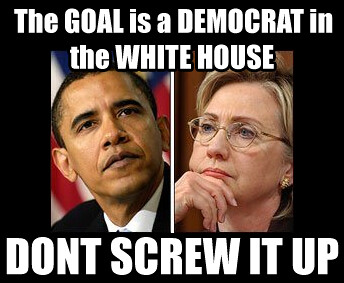
Tuesday, March 18, 2008
The speech.
In a comment on my post on Wright, Stuff Daddy wrote:
"With out a doubt, I think it's the most important speech on race given by a public mainstream figure in my entire lifetime.
I am with him now more than ever. He is extraordinary.."
This is exactly how I feel.
I do not remember, in my lifetime, anyone saying anything like this, in this way, to a national audience. Even though he is not saying anything new, because he is saying it publicly, because America is listening to him, I feel like it's the first time in my life that any of it is being said outside of communities of color. And because of that, I want to focus on what I think is the importance of what he said to White people.
Much of what he talked about is stuff that White people don't generally hear, partly because, as Obama says, we are still a segregated nation (he's pointing to churches and the difference in what is said in Black and White churches; my pointing is more general). Many Whites simply have not heard this stuff before. And many others who have heard some of the anger Obama speaks of have been afraid or offended and thus haven't actually listened to what was being said. To hear it translated in so gentle a way, as an invitation to join with him, with all Americans, is a gift - and it is a gift to be able to translate it so skillfully.
I really do believe that we who live in America are not speaking the same language, even when we're speaking English. Whites hear Black anger at the persistent impact of racism as "reverse racism," hateful, and threatening. Repeatedly, when I read the words of people of color, I read "they don't listen to us." And when I read Whites' words, I read, "I can't listen to what they're saying because it makes me feel bad / offends me."
Obama's speech bridged this gap. He offered Whites a hand in clambering over this barrier between races. He made White people's love for racist relatives understandable, acceptable, simply part of the complexity of being human. And in offering that image of his White grandmother, he also explained clearly the complicated nature of love and loyalty and his connection to Rev. Wright.
He also reminded us, but without pointing fingers, that many people do, in fact, have serious disagreements with our "pastors, priests, or rabbis." How many Whites who themselves do not think of homosexuality as a sin nevertheless remain in congregations where the pastor condemns it? How many remain in congregations where the pastor, and perhaps other congregants, actively work to prevent gay people from having civil rights? How many Whites disagree with their priests on issues of abortion and birth control, yet stay to hear violent language about those who support reproductive freedom for women?
And so, Obama, by talking about race in very deliberate - and generous - ways, I think, managed to transcend it. He is still a Black man, and we White folks are still White. But in talking about race in this way, he elevated the discussion beyond the too-simple ways in which we generally talk about race. He talked honestly, out loud, about things White and Black people are sometimes afraid to say. He made it ok to talk about these things, and he made it ok that we are all stumbling around trying to figure out how in the hell we can talk to each other. He gave us a way to talk to each other - in the tradition of Audre Lorde, bell hooks, and Barbara Smith, who have always spoken generously (if firmly) to White allies, he focused us on listening to other's stories and lending a hand to other's struggles. With this speech, he taught Whites the first lesson in how to be allies, and he did so without triggering White guilt. He made it ok to focus on the shared work at hand, on our unity rather than our differences, and so we begin to move beyond race as a barrier and into a new conversation.
And, what the hell, this already the sappiest post I've written in a long time - let me echo Michelle Obama and just say that, for the first time in a long time, I feel deeply proud to be an American.
(For some other responses to Obama's speech, check this out. I've been linking to Bfp a lot lately, and for good reason. If you aren't reading her regularly, you should be.)
"With out a doubt, I think it's the most important speech on race given by a public mainstream figure in my entire lifetime.
I am with him now more than ever. He is extraordinary.."
This is exactly how I feel.
I do not remember, in my lifetime, anyone saying anything like this, in this way, to a national audience. Even though he is not saying anything new, because he is saying it publicly, because America is listening to him, I feel like it's the first time in my life that any of it is being said outside of communities of color. And because of that, I want to focus on what I think is the importance of what he said to White people.
Much of what he talked about is stuff that White people don't generally hear, partly because, as Obama says, we are still a segregated nation (he's pointing to churches and the difference in what is said in Black and White churches; my pointing is more general). Many Whites simply have not heard this stuff before. And many others who have heard some of the anger Obama speaks of have been afraid or offended and thus haven't actually listened to what was being said. To hear it translated in so gentle a way, as an invitation to join with him, with all Americans, is a gift - and it is a gift to be able to translate it so skillfully.
I really do believe that we who live in America are not speaking the same language, even when we're speaking English. Whites hear Black anger at the persistent impact of racism as "reverse racism," hateful, and threatening. Repeatedly, when I read the words of people of color, I read "they don't listen to us." And when I read Whites' words, I read, "I can't listen to what they're saying because it makes me feel bad / offends me."
Obama's speech bridged this gap. He offered Whites a hand in clambering over this barrier between races. He made White people's love for racist relatives understandable, acceptable, simply part of the complexity of being human. And in offering that image of his White grandmother, he also explained clearly the complicated nature of love and loyalty and his connection to Rev. Wright.
He also reminded us, but without pointing fingers, that many people do, in fact, have serious disagreements with our "pastors, priests, or rabbis." How many Whites who themselves do not think of homosexuality as a sin nevertheless remain in congregations where the pastor condemns it? How many remain in congregations where the pastor, and perhaps other congregants, actively work to prevent gay people from having civil rights? How many Whites disagree with their priests on issues of abortion and birth control, yet stay to hear violent language about those who support reproductive freedom for women?
And so, Obama, by talking about race in very deliberate - and generous - ways, I think, managed to transcend it. He is still a Black man, and we White folks are still White. But in talking about race in this way, he elevated the discussion beyond the too-simple ways in which we generally talk about race. He talked honestly, out loud, about things White and Black people are sometimes afraid to say. He made it ok to talk about these things, and he made it ok that we are all stumbling around trying to figure out how in the hell we can talk to each other. He gave us a way to talk to each other - in the tradition of Audre Lorde, bell hooks, and Barbara Smith, who have always spoken generously (if firmly) to White allies, he focused us on listening to other's stories and lending a hand to other's struggles. With this speech, he taught Whites the first lesson in how to be allies, and he did so without triggering White guilt. He made it ok to focus on the shared work at hand, on our unity rather than our differences, and so we begin to move beyond race as a barrier and into a new conversation.
And, what the hell, this already the sappiest post I've written in a long time - let me echo Michelle Obama and just say that, for the first time in a long time, I feel deeply proud to be an American.
(For some other responses to Obama's speech, check this out. I've been linking to Bfp a lot lately, and for good reason. If you aren't reading her regularly, you should be.)
Coming soon...
...a review of a new book on abortion;
...thoughts on Barack Obama's address on race;
...a response to one white man's journey to take responsibility for his ancestor's racist, deadly acts.
All that and more, coming just as soon as I catch up on the laundry, finish my grading, and make dental appointments for everyone. Stay tuned!
...thoughts on Barack Obama's address on race;
...a response to one white man's journey to take responsibility for his ancestor's racist, deadly acts.
All that and more, coming just as soon as I catch up on the laundry, finish my grading, and make dental appointments for everyone. Stay tuned!
Monday, March 17, 2008
On Rev. Jeremiah Wright.
I have missed much of the national freaking-out about Barack Obama's pastor, Rev. Jeremiah Wright, and so I'm in the process of catching up. In this process, I happened to read the post at La Chola by Melissa Harris-Lacewell, and I recommend it. An excerpt:
"Let’s be clear. American democracy has always coexisted with vicious, state-sponsored racism. The nation’s first presidents worked to establish an innovative, flexible, radical democratic republic while simultaneously codifying enslaved blacks as a fraction human and relegating them to intergenerational chattel bondage. After emancipation, as blacks helped make America the greatest industrial and military power on earth, the country stripped blacks of the right to vote, segregated public accommodations, provided inferior education to black children, and allowed and promoted the terrorist rule of lynch-mob violence.
This week Barack Obama was pressured to denounce Jeremiah Wright. But in the hundred years following the end of the Civil War more than five thousand African Americans were lynched and not a single president denounced the atrocities. Because of this history, black patriotism is complicated. Black patriots love our country, even though it has often hated us. We love our country, even while we hold it accountable for its faults."
Tuesday, March 11, 2008
Lovin' that Bean of mine.
I got a wonderful compliment yesterday. Bean asked me, at a dinner function that I took him to, "why are you always so nice to people? You always say, "hi!" to everyone!" So we talked about being friendly, and from that I segued into telling him that I was really excited for him to meet some of the people I know and like, and that I've told them about him and they were really excited to meet him. When I introduce him to people, he usually hides, and I've worked on trying to get him to at least wave or say "hi," even if he's shy. But that conversation seemed to make a difference, because after that, he was saying "hi" to everyone who said "hi" to him - and doing so very eagerly, like he'd finally realized that people weren't just doing that to annoy him, but because they genuinely were interested in him - and that I liked them, and so he might like them, too.
And also - my kid thinks I'm nice!
And also - my kid thinks I'm nice!
Sunday, March 09, 2008
Sunday.
I have become someone who does absolutely nothing on the weekends except eat and sit at the computer. Which is not a good thing. I suspect this comes from working for 10+ hours a day during the week - by the weekend, I'm so exhausted that I only have energy to crawl out of bed to pee, eat, and maybe do a load or two of laundry. I read a little of the paper, because I get two Sunday papers and I feel like I should do something to justify, if not the insignificant cost, then at least the trees who bravely gave their lives so that I could have a Sunday paper. And I catch up on blogs and wish that I had more to say on my own blog. (I can't tell you how much I long to take my computer to Starbucks and blog there, while the sun streams in the window and the steam rises from my chai latte. I may have to write some snarky comments on certain mommy bloggers' sites at which this sort of description of their day is common.)
Some people came to the door a couple of hours ago to sell me their religion, and I was embarrassed, because whenever this happens, I am in my pajamas, hair uncombed, face unwashed, no bra, bare feet, child lagging behind me in various states of undress / dress-up. I feel like I might as well hang a sign around my neck that reads "heathen," especially on Sunday. I really miss having a buzzer so that I could find out who is at the door before I expend the energy to walk all the way down there.
Bean wants to go out and "do something," as do I, but I think it may be illegal for me to leave the house without first taking a shower. And also, I have to do laundry at some point so that we will have clothes for the week. And I'm not sure when I last changed the sheets, so that should happen, too.
And, on top of everything else, today we're back to Daylight Savings. I suppose I should be grateful, as that means that when I finally make it down to the basement to do the laundry, it might still be light outside, making the creepy basement a whole lot less creepy. But I hate losing an hour, and I will be very grumpy if I wake up in the dark tomorrow morning.
Sunday. Feh. I can't wait until break.
Some people came to the door a couple of hours ago to sell me their religion, and I was embarrassed, because whenever this happens, I am in my pajamas, hair uncombed, face unwashed, no bra, bare feet, child lagging behind me in various states of undress / dress-up. I feel like I might as well hang a sign around my neck that reads "heathen," especially on Sunday. I really miss having a buzzer so that I could find out who is at the door before I expend the energy to walk all the way down there.
Bean wants to go out and "do something," as do I, but I think it may be illegal for me to leave the house without first taking a shower. And also, I have to do laundry at some point so that we will have clothes for the week. And I'm not sure when I last changed the sheets, so that should happen, too.
And, on top of everything else, today we're back to Daylight Savings. I suppose I should be grateful, as that means that when I finally make it down to the basement to do the laundry, it might still be light outside, making the creepy basement a whole lot less creepy. But I hate losing an hour, and I will be very grumpy if I wake up in the dark tomorrow morning.
Sunday. Feh. I can't wait until break.
Saturday, March 08, 2008
To the person who found my site by Googling
"girls on toilet without no clothes on and not covering up their vagina+pictures," I can only say, first, that it should be "without any clothes on" (otherwise, the double negative would mean that they did, indeed, have clothes on), and second, ew. Go away.
Wednesday, March 05, 2008
International Sex Workers Rights Day was March 4.
Renegade Evolution recently posted on her blog her great frustration that this was not a topic that was discussed in feminist blogland. She wrote about it, as well, on AlterNet, and lest you think that what she is after is a celebration of sex work, here's an excerpt of her post:
While I do think that this silence around this topic this week is worth noting, even more noteworthy (to me) are the responses she got at AlterNet:
Why are you looking for women to support an organization that promotes an industry responsible for the rape and enslavement of women all over the world? Why is it feminist to promote the idea that a woman's body is a commodity for sale? Why is it feminist to teach this to our daughters?
Why should I spend my time supporting women or men who voluntarily support the patriarchal status quo? What ever ‘sex workers’ may claim - it is not a ‘job like any other’ fair enough do what you want to do but don’t expect me (as a father of two daughters) to give any of my energy to supporting men’s perceived right to female bodies. It’s just not going to happen.
Good idea...men get a celebration of a seasonal Pussy on a Plate.
Wow - can't forget about the menz - you know, the oppressed and forgotten lot...
See, these are classic examples of what NOT LISTENING looks like. Mention sex workers' rights, and people are hearing "promote prostitution" and "help men buy women's bodies." If there was ever any doubt about what anti-prostitution advocates think about sex workers, there sure isn't anymore - from these comments, they don't appear to think of them at all.
Which is why acknowledging sex workers' rights is important. When a woman is thought to be unrapeable, when she is unable to demand safe working conditions, when she is punished for exchanging sex for money but the people who abuse her are not - these are violations of human rights. Fighting for sex workers' safety, for decent working conditions, has nothing to do with how one might feel about prostitution. If one is really trying to help sex workers, then one ought to listen when they ask for help.
But somehow, it becomes about promoting prostitution if we do anything to help sex workers, right? Gah.
"Nary you mind that the way things are currently, however many sex workers could get robbed and raped tonight and have it laughed off by the law, nary you mind that sex workers pulled over by the law will be black mailed into favors, nary you mind that sex workers of all races, genders, classes, political bent, religion, will still be seen by the majority of humanity as less than human themselves, nary you mind possession of condoms in the highly vaunted Swedish State is cause for arrest and possible immediate deportation."
While I do think that this silence around this topic this week is worth noting, even more noteworthy (to me) are the responses she got at AlterNet:
Why are you looking for women to support an organization that promotes an industry responsible for the rape and enslavement of women all over the world? Why is it feminist to promote the idea that a woman's body is a commodity for sale? Why is it feminist to teach this to our daughters?
Why should I spend my time supporting women or men who voluntarily support the patriarchal status quo? What ever ‘sex workers’ may claim - it is not a ‘job like any other’ fair enough do what you want to do but don’t expect me (as a father of two daughters) to give any of my energy to supporting men’s perceived right to female bodies. It’s just not going to happen.
Good idea...men get a celebration of a seasonal Pussy on a Plate.
Wow - can't forget about the menz - you know, the oppressed and forgotten lot...
See, these are classic examples of what NOT LISTENING looks like. Mention sex workers' rights, and people are hearing "promote prostitution" and "help men buy women's bodies." If there was ever any doubt about what anti-prostitution advocates think about sex workers, there sure isn't anymore - from these comments, they don't appear to think of them at all.
Which is why acknowledging sex workers' rights is important. When a woman is thought to be unrapeable, when she is unable to demand safe working conditions, when she is punished for exchanging sex for money but the people who abuse her are not - these are violations of human rights. Fighting for sex workers' safety, for decent working conditions, has nothing to do with how one might feel about prostitution. If one is really trying to help sex workers, then one ought to listen when they ask for help.
But somehow, it becomes about promoting prostitution if we do anything to help sex workers, right? Gah.
Subscribe to:
Posts (Atom)


